What Should Parents Expect in the First Month of Preschool
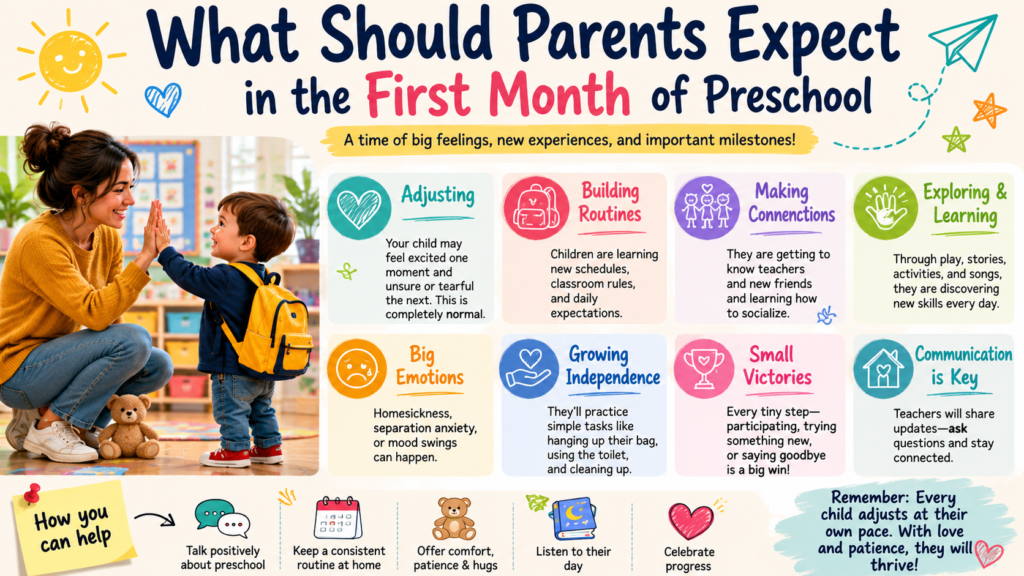
Starting preschool is a major milestone in a child’s life. For many children, it is the first time they spend several hours away from their parents, follow a structured routine, and interact with teachers and classmates regularly.
As exciting as this new chapter can be, the first month of preschool often comes with a mix of emotions for both children and parents. Some children settle in quickly, while others need a little more time to adjust.
Understanding what to expect during the first month can help parents feel prepared and support their child through this important transition.
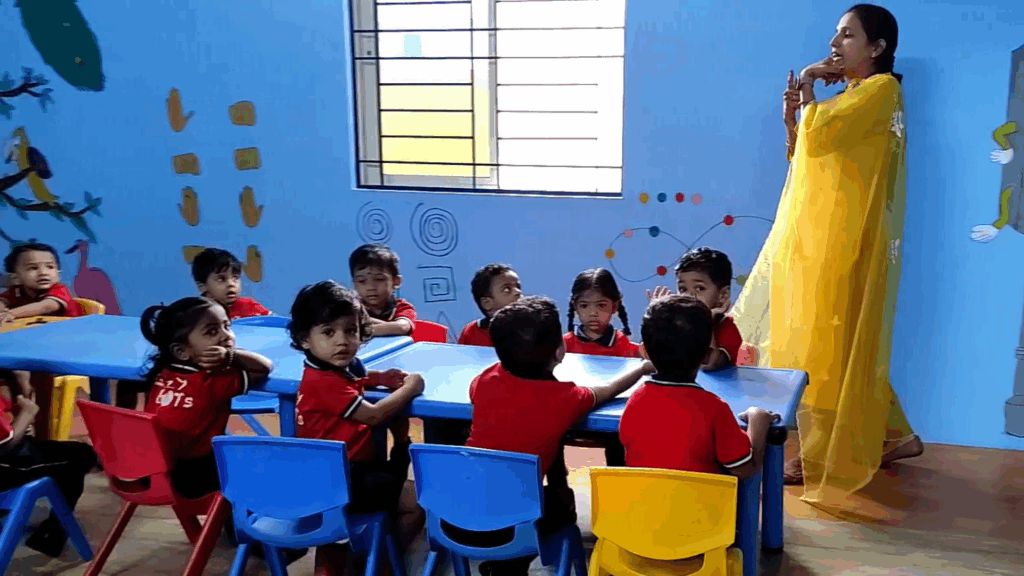
At Krazy Tots International Preschool in Horamavu, Bengaluru, we work closely with families to ensure every child feels safe, confident, and happy as they begin their preschool journey.
Quick Answer
During the first month of preschool, parents can expect a period of adjustment. Children may experience separation anxiety, new routines, emotional ups and downs, and excitement about making friends and learning new things. With patience, consistency, and support from teachers, most children gradually become comfortable and confident in their preschool environment.
- Quick Answer
- What Happens During the First Month of Preschool?
- Week 1: Getting Comfortable With a New Environment
- Week 2: Building Familiarity
- Week 3: Making Friends
- Week 4: Feeling More Confident
- What Children Learn During the First Month
- Common Parent Concerns During the First Month
- Signs Your Child Is Adjusting Well
- Why the First Month Matters
- Why Families Choose Krazy Tots International Preschool in Horamavu
- What Should Parents Expect in the First Month of Preschool FAQs
- Final Thoughts of What Should Parents Expect in the First Month of Preschool
- Looking for a Preschool in Horamavu?
What Happens During the First Month of Preschool?
The first month is all about helping children become familiar with their new surroundings.
Children are learning:
- New routines
- Classroom rules
- Teacher expectations
- Social interactions
- Independence skills
This adjustment period is completely normal and important for long-term success.
Week 1: Getting Comfortable With a New Environment
The first week is usually the biggest adjustment period.
Many children are experiencing:
- A new classroom
- New teachers
- New friends
- New routines
Some children may be excited from day one, while others may feel nervous or overwhelmed.
Parents may notice:
- Clinginess
- Crying during drop-off
- Changes in mood
- Extra need for comfort at home
These reactions are common and usually temporary.
Separation Anxiety Is Normal
One of the most common experiences during the first month is separation anxiety.
Children may:
- Cry when parents leave
- Ask to stay home
- Feel unsure about the new environment
This does not mean preschool is a bad fit.
In most cases, children settle down shortly after parents leave and gradually become more comfortable each day.
The key is consistency and reassurance.
Week 2: Building Familiarity
By the second week, children often begin recognizing:
- Teachers
- Friends
- Daily routines
- Classroom activities
Many children start showing signs of increased comfort.
Parents may notice:
- Easier drop-offs
- More willingness to attend school
- Greater curiosity about activities
This stage helps children build trust and confidence.
Learning New Routines
Preschool introduces structure to a child’s day.
Children learn routines such as:
- Arriving at school
- Circle time
- Snack time
- Playtime
- Story sessions
- Clean-up routines
Predictable schedules help children feel secure and understand what comes next.
Week 3: Making Friends
Friendships begin developing naturally during the third week.
Children start:
- Playing together
- Sharing toys
- Participating in group activities
- Learning social skills
These early friendships help children feel connected and excited about attending preschool.
Even shy children often begin interacting more as they become comfortable.
Developing Independence
One of the biggest benefits of preschool is increased independence.
Children begin learning how to:
- Carry their own bags
- Wash hands independently
- Follow instructions
- Put away toys
- Make simple choices
Parents are often surprised by how quickly children develop these important life skills.
Week 4: Feeling More Confident
By the fourth week, many children begin feeling like preschool is part of their normal routine.
Common signs of successful adjustment include:
- Less resistance during drop-off
- Talking about school positively
- Mentioning teachers and friends
- Participating in activities
- Showing excitement about attending
Children who initially struggled often become much more confident during this stage.
Emotional Ups and Downs Are Normal
Even after settling in, children may still have occasional difficult days.
This can happen because of:
- Tiredness
- Changes in routine
- Growth and development
- Minor social challenges
Parents should not worry if progress is not perfectly linear.
Adjustment is a process, not a single event.
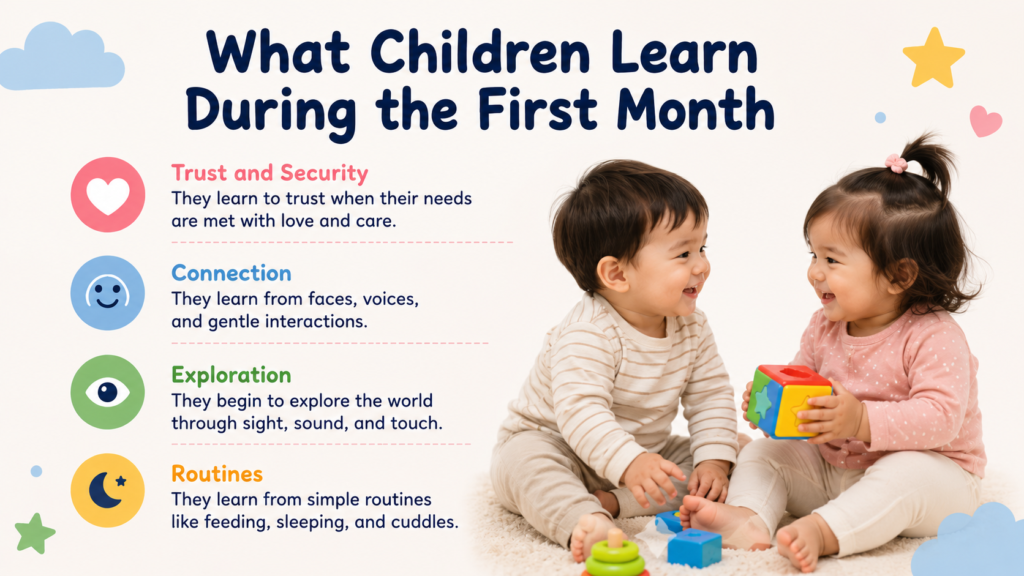
What Children Learn During the First Month
The first month is about much more than academics.
Children begin developing:
Social Skills
Learning to:
- Share
- Take turns
- Listen
- Cooperate
Communication Skills
Children practice:
- Expressing thoughts
- Asking questions
- Following directions
Emotional Skills
They learn:
- Managing feelings
- Building confidence
- Developing resilience
Independence
Children begin handling small responsibilities on their own.
These foundational skills support future learning and success.
What Parents Can Do to Help
Parents play an important role during the adjustment period.
Maintain a Consistent Routine
Regular schedules help children feel secure.
Try to keep:
- Wake-up times
- Meal times
- Bedtimes
consistent throughout the week.
Keep Goodbyes Short and Positive
Long emotional goodbyes can make separation harder.
Instead:
- Stay calm
- Offer reassurance
- Leave confidently
Children often take emotional cues from parents.
Talk Positively About Preschool
Focus on positive experiences such as:
- New friends
- Fun activities
- Stories and songs
This helps build excitement and confidence.
Be Patient
Every child adjusts differently.
Some children settle in within days.
Others may need several weeks.
Patience and encouragement make a big difference.
Common Parent Concerns During the First Month
“My Child Cries at Drop-Off”
This is one of the most common concerns.
In most cases, children calm down shortly after parents leave.
“My Child Seems More Tired”
Preschool introduces new experiences and social interactions.
Extra tiredness during the first few weeks is completely normal.
“My Child Is Suddenly More Emotional”
Big changes can temporarily affect emotions.
Most children adjust as they become familiar with their new routine.
“My Child Doesn’t Talk Much About School”
Some children are naturally less expressive.
Teachers can often provide insights into how your child is doing.
Signs Your Child Is Adjusting Well
Positive signs include:
- Willingness to attend school
- Talking about teachers or friends
- Participating in activities
- Increased independence
- Returning home in a positive mood
These signs indicate growing comfort and confidence.
Why the First Month Matters
The first month lays the foundation for:
- School readiness
- Social development
- Confidence
- Independence
- Positive attitudes toward learning
A supportive preschool environment can make this transition smooth and enjoyable.
Why Families Choose Krazy Tots International Preschool in Horamavu
At Krazy Tots International Preschool, we understand that starting preschool is a major step for both children and parents.
Our programs are designed to help children adjust comfortably through:
- Experienced and caring teachers
- Play-based learning
- Safe and secure campus
- Spacious classrooms
- Large open play area
- Covered outdoor activity spaces
- Nursery, LKG, UKG, and daycare programs
- Individual attention for every child
We focus on making every child’s first preschool experience positive, nurturing, and enjoyable.
What Should Parents Expect in the First Month of Preschool FAQs
Is it normal for children to cry during the first month of preschool?
Yes. Separation anxiety is very common and usually improves as children become comfortable with their new environment.
How long does it take children to adjust to preschool?
Some children adjust within a few days, while others may take several weeks. Every child develops at their own pace.
What should I do if my child does not want to go to preschool?
Stay calm, maintain routines, and work closely with teachers. Consistency often helps children adjust successfully.
Will my child make friends in the first month?
Many children begin forming friendships during the first few weeks through play and group activities.
What skills do children learn during the first month?
Children develop social skills, communication abilities, independence, emotional regulation, and classroom routines.
Final Thoughts of What Should Parents Expect in the First Month of Preschool
The first month of preschool is an exciting period filled with learning, growth, and adjustment. While some challenges are normal, most children gradually become comfortable as they build relationships, learn routines, and gain confidence.
With patience, encouragement, and support from teachers, preschool becomes a place where children can learn, play, and thrive.
At Krazy Tots International Preschool in Horamavu, Bengaluru, we are committed to making every child’s first preschool experience happy, safe, and memorable.
Looking for a Preschool in Horamavu?
Visit Krazy tots Preschool today and discover a nurturing learning environment with experienced teachers, spacious play areas, and engaging programs designed to help children start their educational journey with confidence.