01
Encourages Trial and Error
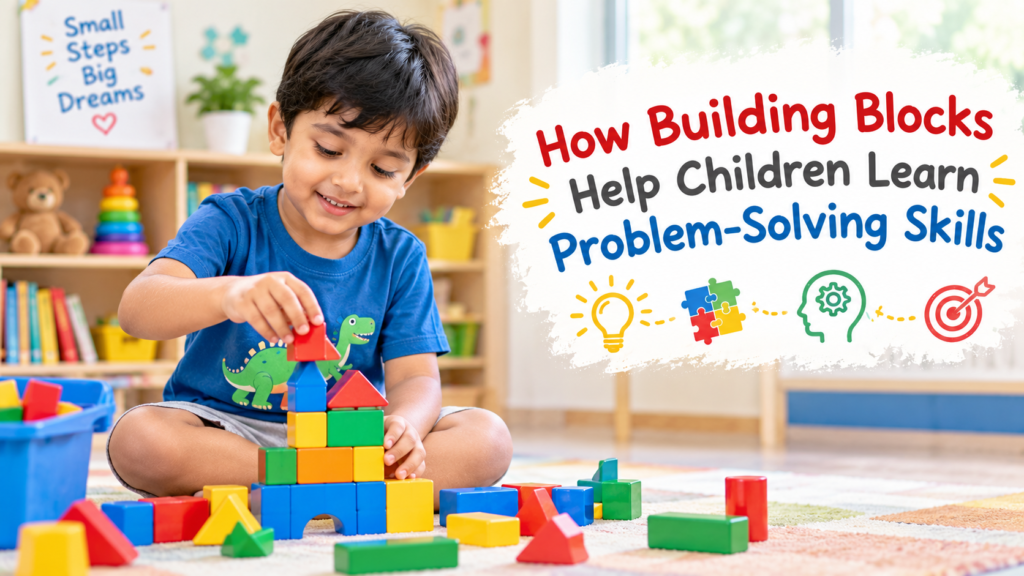
Children learn that their first attempt may not always work. If a tower falls, they can try placing larger blocks at the bottom or making the structure shorter. Each attempt gives them a chance to explore a different solution.
02
Develops Planning Skills
Before building a house, bridge, or tower, children may need to decide where to place each block. They begin thinking about what they want to create and which pieces they might need.
03
Builds Logical Thinking
Blocks help children notice patterns and relationships. They may discover that a wide base makes a tower more stable or that a long block can connect two sides of a bridge.
04
Teaches Patience and Persistence
Building a structure often takes several attempts. Children may need to adjust a block, rebuild a section, or start again after something falls. With encouragement, they learn to stay with a challenge.
05
Encourages Creativity and Flexible Thinking
There is no single correct way to use building blocks. The same pieces can become a house, a train station, a zoo, or a spaceship. If a child does not have the right piece, they can find another way to create what they imagined.
06
Develops Cooperation and Communication
When children build together, they need to share materials, explain ideas, and decide what to do next. One child might suggest making the tower taller while another wants to build a road.
HOW PARENTS CAN SUPPORT PROBLEM-SOLVING DURING PLAY
Let Children Work Through Small Challenges
It can be tempting to step in when a structure falls or a child seems unsure what to do. However, children need opportunities to attempt solutions independently.
Allow mistakes to happen. A fallen tower can help a child understand balance and structure. Keep the experience positive and encourage another attempt.
Avoid giving the answer too quickly. Offer a question or a small hint before demonstrating a solution.
Praise effort and thinking. Instead of saying only, “That is a beautiful tower,” try, “You changed the bottom blocks, and now the tower is standing.”
Keep challenges suitable for your child’s age. Younger preschoolers may enjoy stacking and fitting pieces together, while older children may be ready for bridges, patterns, and more detailed structures.
Let imagination guide the activity. If your child starts building a rocket instead of the house you suggested, follow their idea and explore the new challenge together.
Make room for independent play. Children do not always need an adult to direct every step. Sometimes, observing quietly gives them the space to test their own ideas.
COMMON MISTAKES TO AVOID DURING BUILDING ACTIVITIES
A few simple changes can make block play more enjoyable and beneficial.
Avoid focusing only on the finished structure. The process of planning, experimenting, and rebuilding is just as valuable as the final result.
Do not compare children’s creations. Each child has different interests, experiences, and abilities.
Avoid correcting every unusual design. A building does not need to look realistic to encourage learning.
Do not turn every activity into a competition. Some children enjoy building quickly, while others prefer to take their time and explore.
Avoid using blocks that are unsuitable for your child’s age. Choose sturdy, age-appropriate materials and supervise play with small pieces to reduce choking risks.
HOW PRESCHOOL SUPPORTS PROBLEM-SOLVING SKILLS
Learning Through Hands-On Exploration
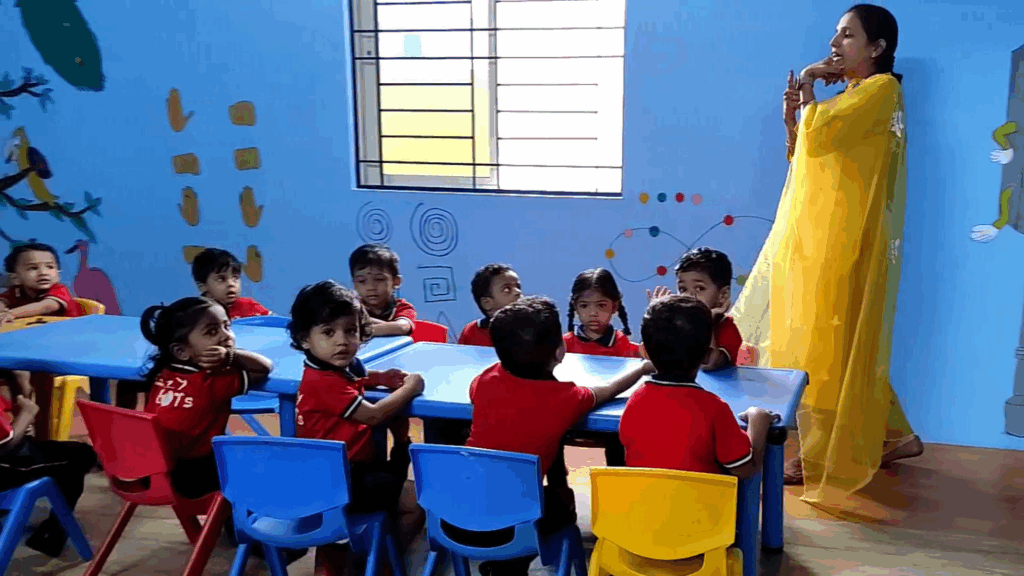
Preschool gives children opportunities to explore materials, ask questions, work with others, and find solutions through play. Building activities can be combined with storytelling, sorting, counting, art, and imaginative games to support different areas of early development.
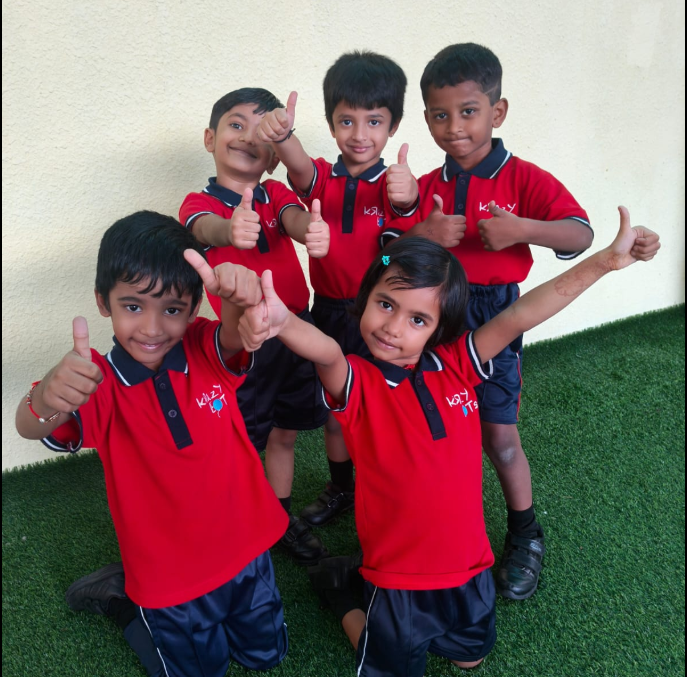
At Krazy Tots International Preschool in Horamavu, Bangalore, age-appropriate hands-on activities can encourage children to explore ideas, make choices, and participate in playful learning experiences.
For example, children building together can discuss how to make a structure taller or how to connect two sections. Sorting and counting blocks can introduce early maths concepts, while creating pretend homes or roads can encourage storytelling and communication.
A supportive learning environment gives children opportunities to try, make mistakes, ask for help, and discover solutions at their own pace.
The aim is not to make every structure perfect. It is to help children become curious thinkers who are willing to explore different possibilities.