01
Number Recognition
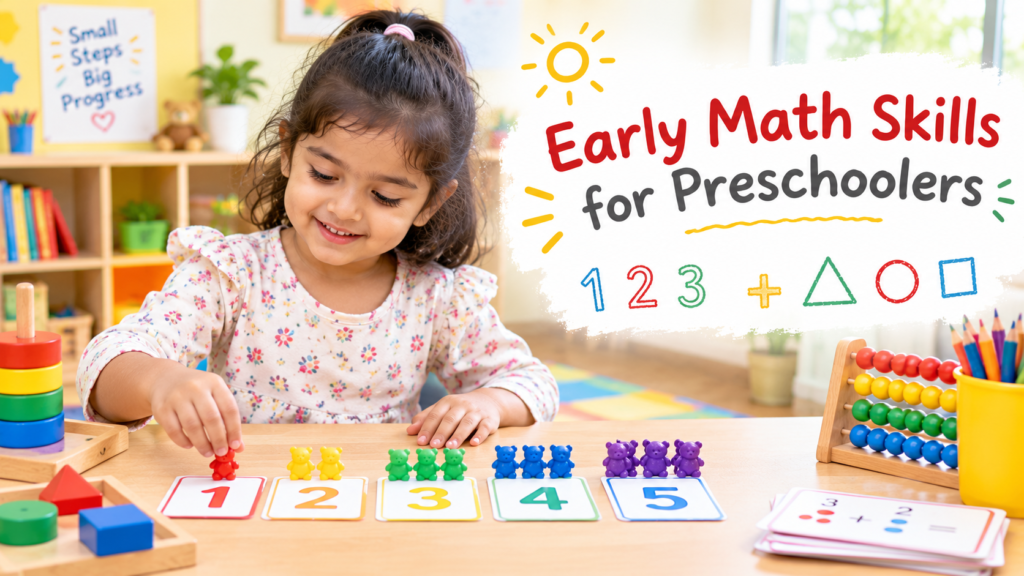
Children gradually learn to recognise number symbols such as 1, 2, 3 and 4. Number cards, picture books and everyday objects can help them connect written numbers with real quantities.
02
Counting Objects
Counting toys, blocks or pieces of fruit helps children understand that each object represents one number when counted correctly.
03
Understanding More and Less
Comparing two groups of objects helps children notice which group has more, which has fewer and when two groups have the same amount.
04
Recognising Shapes
Circles, squares, triangles and rectangles are all around us. Recognising these shapes helps children develop visual awareness and early geometry skills.
05
Sorting and Classifying
Grouping objects by colour, shape, size or type encourages children to notice similarities and differences.
06
Patterns and Sequences
Repeating patterns, such as red-blue-red-blue, help children recognise order and predict what might come next.
How Parents Can Support Early Maths at Home
Parents do not need to be maths teachers to help children develop early number skills. Simple conversations and everyday activities can make a real difference.
Make counting part of daily life
Count toys, fruits, steps or other familiar objects together. Allow your child to touch each object while counting.
Ask questions instead of giving every answer
Try questions such as “Which tower is taller?” or “What do you think comes next?” Give your child time to observe and respond.
Use real objects before worksheets
Blocks, toys, cups and picture cards help children see and touch the quantities they are learning about.
Keep learning playful
Turn sorting, counting and pattern-making into games. Children are more likely to stay interested when activities feel enjoyable rather than like a test.
Repeat concepts naturally
Children often need to explore the same idea several times before they understand it confidently. Revisit counting and sorting in different situations.
Avoid comparing children
Some children recognise number symbols early, while others understand quantities more easily through objects. Development varies, and progress matters more than comparison.
Celebrate effort and curiosity
Encourage children when they try counting, notice a pattern or solve a small problem. Mistakes are opportunities to explore and learn.
How Preschool Helps Children Develop Early Math Skills
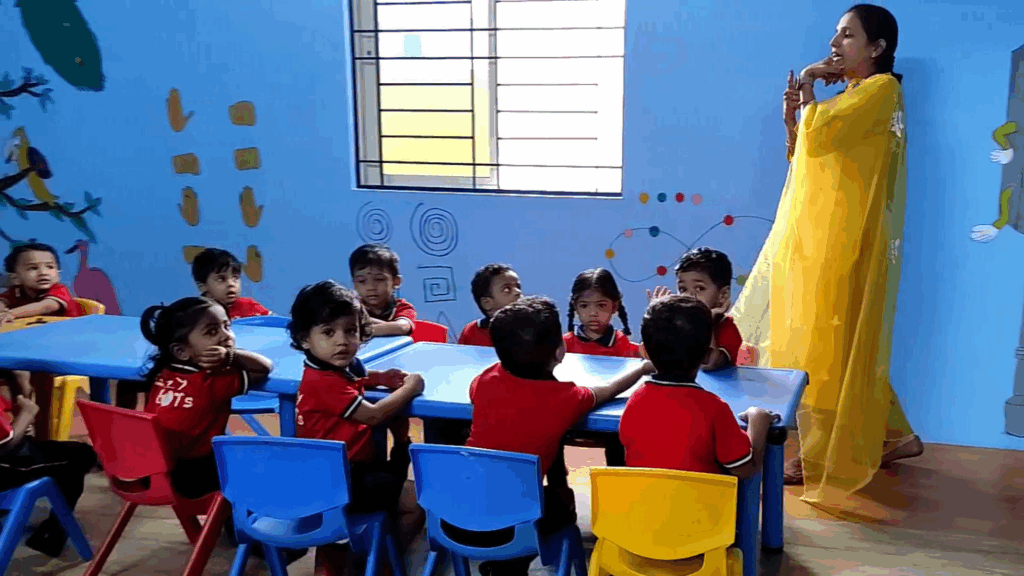
At Krazy Tots International Preschool, early learning provides opportunities for children to explore mathematical ideas through age-appropriate activities, classroom routines and hands-on experiences.
From Nursery to LKG and UKG, children can gradually become familiar with number recognition, counting, shapes, patterns, comparisons and simple number relationships.
Activities using blocks, picture cards, sorting materials, stories and everyday objects can help children connect abstract ideas with things they can see and handle.
Teachers can also adapt activities to suit children’s individual abilities. Some children may be ready to recognise written numbers, while others may benefit from additional opportunities to count objects or compare groups.
A balanced early learning environment combines guided learning with play, creative activities, movement and social interaction. This helps children build confidence in exploring new ideas without unnecessary pressure to master formal calculations too early.
The aim is to help children develop a positive relationship with maths and become comfortable asking questions, noticing patterns and trying different ways to solve problems.