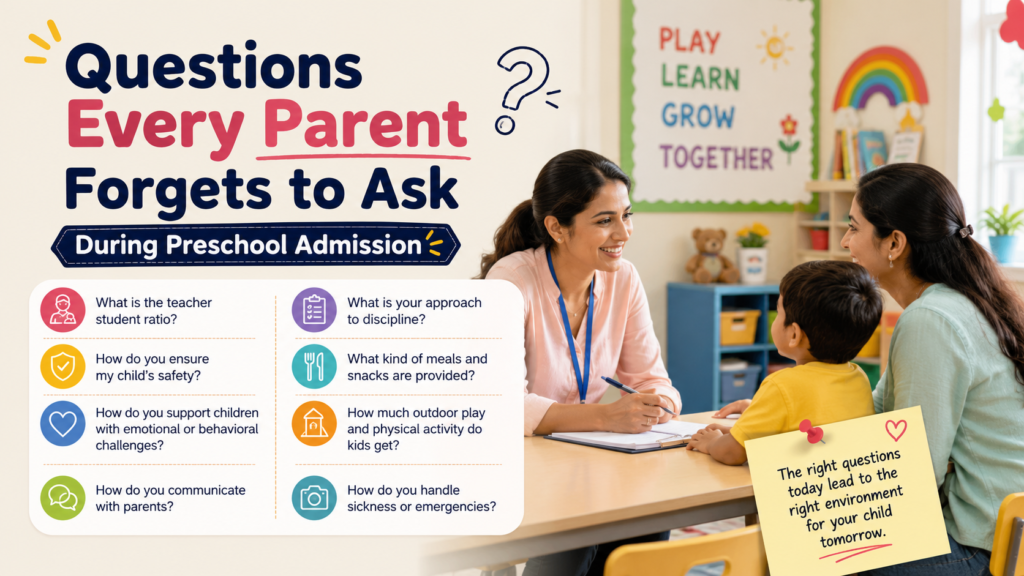
Questions Every Parent Forgets to Ask During Preschool Admission
Choosing a preschool is one of the biggest decisions parents make during their child’s early years. Most parents remember to ask about fees, curriculum, and admission procedures. However, there are many important questions that often get overlooked during preschool admissions.
These forgotten questions can make a huge difference in your child’s daily experience, happiness, safety, and overall development.
If you’re searching for the best preschool in Horamavu, Bengaluru, this guide will help you ask the right questions before making a final decision. At Krazy Tots International Preschool, we encourage parents to be fully informed because choosing the right preschool creates the foundation for a lifetime of learning.
- Why Asking the Right Questions Matters
- Quick Preschool Admission Checklist
- 1. What Is the Teacher-to-Child Ratio?
- 2. How Do Teachers Help Children Who Cry or Feel Anxious?
- 3. How Much Outdoor Play Time Do Children Get?
- 4. What Does a Typical Day Look Like?
- 5. How Do You Communicate With Parents?
- 6. What Safety Measures Are in Place?
- 7. How Are Conflicts Between Children Handled?
- 8. How Do You Track a Child's Progress?
- 9. What Qualifications Do the Teachers Have?
- 10. How Do You Encourage Independence?
- 11. What Happens If My Child Is Sick?
- 12. What Makes Your Preschool Different?
- Red Flags Parents Should Watch For
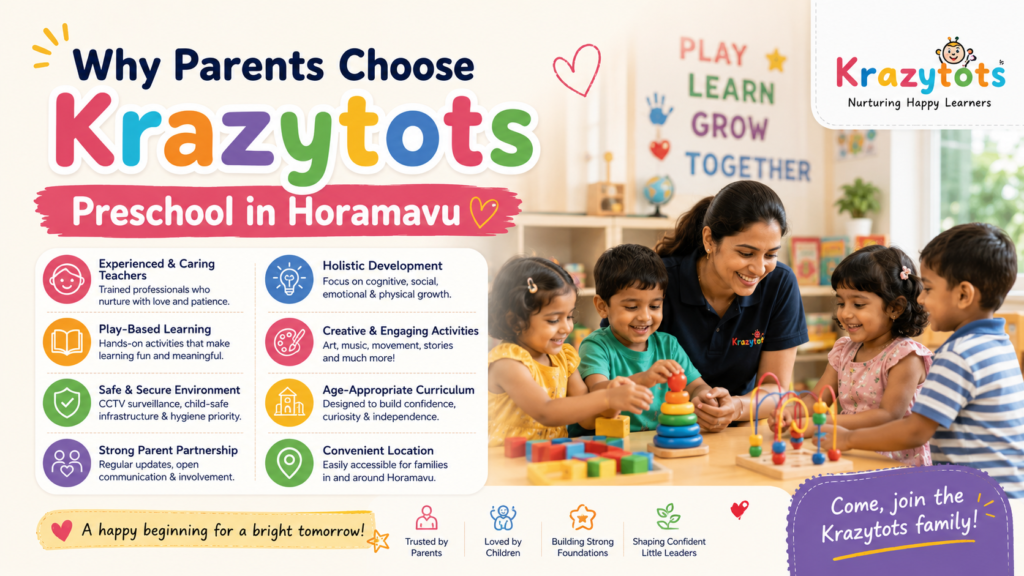
- Why Parents Choose Krazytots Preschool in Horamavu
- Questions Every Parent Forgets to Ask During Preschool Admission FAQs
- Final Thoughts of Questions Every Parent Forgets to Ask During Preschool Admission
Why Asking the Right Questions Matters
A preschool may have beautiful classrooms, attractive brochures, and modern facilities, but what truly matters is how children feel, learn, and grow every day.
The answers to the questions below can help parents understand:
- How the preschool operates daily
- How children are cared for
- How teachers support development
- How safety is managed
- Whether the preschool is the right fit for their child
Quick Preschool Admission Checklist
| Question | Why It Matters |
|---|---|
| What is the teacher-to-child ratio? | Ensures individual attention |
| How are children comforted when upset? | Supports emotional well-being |
| How much outdoor play is included? | Encourages physical development |
| How do teachers communicate with parents? | Builds trust and transparency |
| What safety measures are in place? | Protects children daily |
| How are conflicts handled? | Supports social growth |
| What does a typical day look like? | Helps parents understand routines |
1. What Is the Teacher-to-Child Ratio?
Many parents forget to ask this important question.
A lower teacher-to-child ratio means:
- More personalized attention
- Better supervision
- Stronger teacher-child relationships
- Faster identification of learning needs
Young children learn best when teachers have enough time to support each child individually.
2. How Do Teachers Help Children Who Cry or Feel Anxious?
Starting preschool can be emotional for many children.
Ask:
- How do teachers handle separation anxiety?
- What happens if a child cries for an extended period?
- How do they help children settle into routines?
A caring preschool should have a gentle approach that helps children feel safe and comfortable.
3. How Much Outdoor Play Time Do Children Get?
Many parents focus only on academics and forget to ask about play.
Outdoor play helps children develop:
- Gross motor skills
- Coordination
- Confidence
- Social skills
- Physical fitness
Children need opportunities to move, explore, and interact with others beyond the classroom.
At Krazytots Preschool in Horamavu, children enjoy spacious open play areas along with covered outdoor spaces for year-round activities.
4. What Does a Typical Day Look Like?
Every preschool follows a different routine.
Ask to see a sample daily schedule.
A balanced preschool day should include:
- Circle time
- Play-based learning
- Outdoor activities
- Storytelling
- Music and movement
- Creative activities
- Free play
A healthy balance keeps children engaged without overwhelming them.
5. How Do You Communicate With Parents?
Strong parent-teacher communication is essential.
Ask:
- Do you provide daily updates?
- How often are parent-teacher meetings conducted?
- How are concerns communicated?
Regular communication helps parents stay involved in their child’s development.
6. What Safety Measures Are in Place?
Safety should never be assumed.
Important questions include:
- Is the campus monitored by CCTV?
- How are visitors managed?
- What emergency procedures are followed?
- How are children supervised during play?
A preschool should prioritize safety at every level.
7. How Are Conflicts Between Children Handled?
Young children are still learning social skills.
Occasional disagreements are normal.
Ask:
- How do teachers resolve conflicts?
- How do children learn sharing and cooperation?
- What is the discipline approach?
Positive guidance teaches children important life skills while maintaining a supportive environment.
8. How Do You Track a Child’s Progress?
Preschool is not about exams and report cards.
However, parents should understand how development is monitored.
Ask:
- How do you assess progress?
- What milestones do you observe?
- How are parents informed?
A good preschool tracks social, emotional, physical, and cognitive development.
9. What Qualifications Do the Teachers Have?
Teachers play a crucial role in early childhood education.
Ask about:
- Training
- Experience
- Certifications
- Professional development
Experienced teachers understand how young children learn and develop.
10. How Do You Encourage Independence?
Preschool is often a child’s first step toward independence.
Ask how children are encouraged to:
- Put away belongings
- Wash hands
- Follow routines
- Make simple choices
These everyday skills build confidence and self-reliance.
11. What Happens If My Child Is Sick?
Many parents overlook this question.
Understanding the preschool’s health policy helps avoid confusion later.
Ask:
- When should children stay home?
- What happens if a child becomes ill at school?
- How are parents notified?
Clear health procedures protect all children.
12. What Makes Your Preschool Different?
This simple question often reveals the most valuable information.
Every preschool has unique strengths.
Listen carefully to understand:
- Teaching philosophy
- Learning approach
- Child development focus
- Parent involvement opportunities
The answer can help you determine whether the preschool aligns with your family’s expectations.
Red Flags Parents Should Watch For
While visiting a preschool, be cautious if you notice:
- Limited supervision
- Poor cleanliness
- Unhappy children
- Unclear communication
- High teacher turnover
- Lack of outdoor play
- Overemphasis on worksheets and academics
A quality preschool should create a safe, joyful, and engaging learning environment.
Why Parents Choose Krazytots Preschool in Horamavu
At Krazytots Preschool, we believe preschool should be a place where children feel excited to learn every day.
Families choose us because we provide:
- Experienced and caring teachers
- Play-based learning programs
- Safe and secure campus
- Spacious classrooms
- Large open play area
- Covered outdoor activity spaces
- Nursery, LKG, UKG, and daycare programs
- Affordable fee structure
Our focus is on helping every child build confidence, curiosity, creativity, and a lifelong love for learning.
Questions Every Parent Forgets to Ask During Preschool Admission FAQs
What is the most important question to ask during preschool admission?
The teacher-to-child ratio, safety measures, and learning approach are among the most important questions parents should ask.
How can I tell if a preschool is right for my child?
Observe whether children appear happy, engaged, and comfortable. Also evaluate teacher interactions, safety standards, and communication practices.
Should I ask about outdoor play during admission?
Yes. Outdoor play is essential for physical development, social skills, and overall well-being.
Why is parent-teacher communication important?
Regular communication helps parents stay informed about their child’s progress and supports a stronger partnership between home and school.
What should I look for when visiting a preschool?
Focus on safety, teacher quality, cleanliness, learning methods, child engagement, and overall atmosphere.
Final Thoughts of Questions Every Parent Forgets to Ask During Preschool Admission
Many parents focus on fees and curriculum during preschool admissions but forget to ask questions that truly impact a child’s daily experience.
By asking thoughtful questions about safety, teacher support, communication, outdoor play, and child development, parents can make a more confident and informed decision.
The right preschool should feel like a second home where children feel safe, happy, and excited to learn.
At Krazy Tots International Preschool in Horamavu, Bengaluru, we welcome parents to visit our campus, meet our teachers, and experience our child-friendly learning environment firsthand.