How Many Hours Should a Preschool Child Spend in School
Choosing the right preschool is an important decision for every parent. Along with finding a safe and nurturing environment, many parents ask an important question: How many hours should a preschool child spend in school?
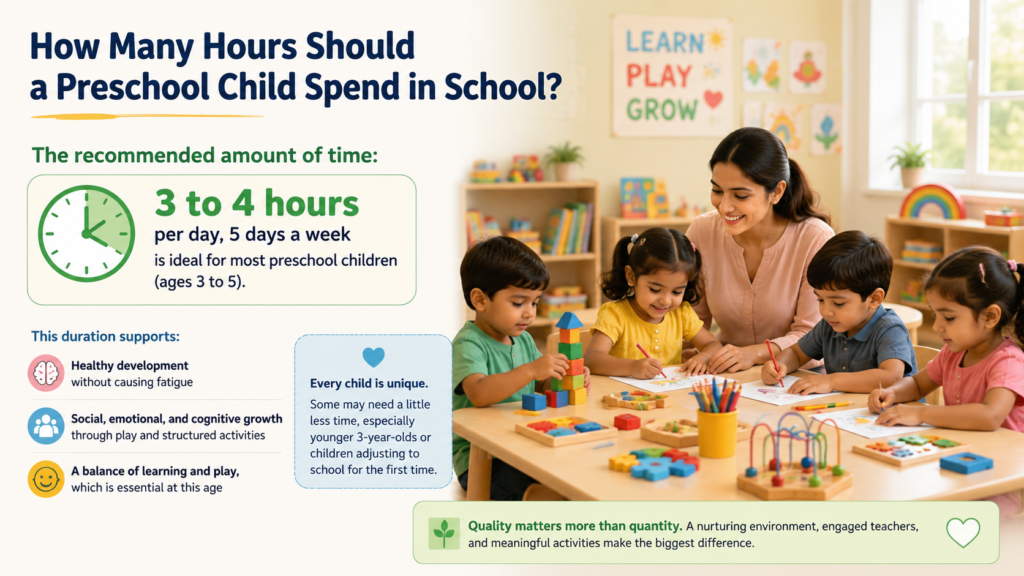
The ideal preschool duration depends on a child’s age, attention span, emotional readiness, and developmental needs. In general, most preschool children benefit from 2 to 4 hours of structured learning and play each day. Younger children may need shorter sessions, while older preschoolers can comfortably participate in longer learning activities.
The goal of preschool is not to keep children in a classroom all day. Instead, it is to provide the right balance of learning, play, social interaction, rest, and exploration.
At Krazy Tots International Preschool in Horamavu, Bengaluru, we follow age-appropriate schedules that help children learn, play, and grow without feeling overwhelmed.
How Many Hours Should a Preschool Child Spend in School
- Why Preschool Hours Matter
- Recommended Preschool Hours by Age
- How Long Should a Nursery Child Stay in School?
- How Long Should LKG Children Stay in School?
- How Long Should UKG Children Stay in School?
- Quality Matters More Than Quantity
- Signs Your Child Is Comfortable with Preschool Hours
- Signs Preschool Hours May Be Too Long
- The Importance of Play During Preschool Hours
- Should Preschool Children Attend Full-Day Programs?
- Benefits of the Right Preschool Schedule
- How Krazy Tots International Preschool Supports Every Child
- Tips for Parents
- How Many Hours Should a Preschool Child Spend in School FAQs
- Final Thoughts of How Many Hours Should a Preschool Child Spend in School
Why Preschool Hours Matter
Young children learn differently from older students. Their brains are still developing, and they learn best through:
- Play
- Exploration
- Social interaction
- Creative activities
- Movement and physical play
Keeping children in structured learning for too many hours can lead to fatigue and reduced engagement. A well-planned preschool schedule helps children stay interested, energetic, and happy throughout the day.
Recommended Preschool Hours by Age
The ideal number of school hours often depends on the child’s age.
| Age Group | Recommended School Hours |
|---|---|
| 2 to 3 Years | 2 to 3 Hours |
| 3 to 4 Years | 2.5 to 3.5 Hours |
| 4 to 5 Years | 3 to 4 Hours |
| 5 to 6 Years | 3.5 to 5 Hours |
Every child is different. Some children adapt quickly, while others need more time to become comfortable with longer schedules.
How Long Should a Nursery Child Stay in School?
Nursery children are usually between 2.5 and 4 years old.
At this age, children are:
- Learning to stay away from parents
- Developing communication skills
- Building social confidence
- Adjusting to routines
For most nursery children, 2.5 to 3.5 hours per day is usually enough. This gives them time to participate in activities, make friends, and learn new skills without becoming tired.
How Long Should LKG Children Stay in School?
LKG (Lower Kindergarten) children are typically between 3.5 and 5 years old.
At this stage, children are ready for:
- Early literacy activities
- Number concepts
- Storytelling
- Group learning
- Creative projects
A schedule of 3 to 4 hours per day often works well for LKG students because it balances learning and play.
How Long Should UKG Children Stay in School?
UKG (Upper Kindergarten) children are preparing for primary school.
They begin learning:
- Reading readiness
- Writing practice
- Basic mathematics
- Classroom routines
Most UKG children can comfortably spend 4 to 5 hours per day in school, provided the schedule includes playtime, movement, and interactive learning activities.
Quality Matters More Than Quantity
Many parents believe longer school hours automatically mean better learning. However, research and child development experts suggest that young children learn best through meaningful experiences rather than long classroom sessions. How Many Hours Should a Preschool Child Spend in School.
A good preschool focuses on:
- Play-based learning
- Small group activities
- Storytelling
- Outdoor play
- Hands-on exploration
Children often gain more from a well-designed 3-hour preschool program than from a full day of repetitive classroom instruction.
Signs Your Child Is Comfortable with Preschool Hours
Every child adapts differently. Here are some positive signs that your child is comfortable with their preschool schedule:
- Excited to go to school
- Participates in activities
- Talks about friends and teachers
- Returns home happy and energetic
- Adjusts well to daily routines
When children enjoy their preschool experience, learning happens naturally.
Signs Preschool Hours May Be Too Long
Some children may struggle if the schedule is longer than they can comfortably handle.
Watch for signs such as:
- Frequent tiredness
- Irritability after school
- Refusing to attend school
- Difficulty concentrating
- Increased emotional outbursts
If you notice these signs, it may help to discuss your child’s routine with teachers and adjust the schedule if needed.
The Importance of Play During Preschool Hours
Play is one of the most important parts of early childhood education.
Through play, children learn:
- Problem-solving
- Creativity
- Teamwork
- Communication
- Emotional regulation
A quality preschool schedule should include both structured learning and free play.
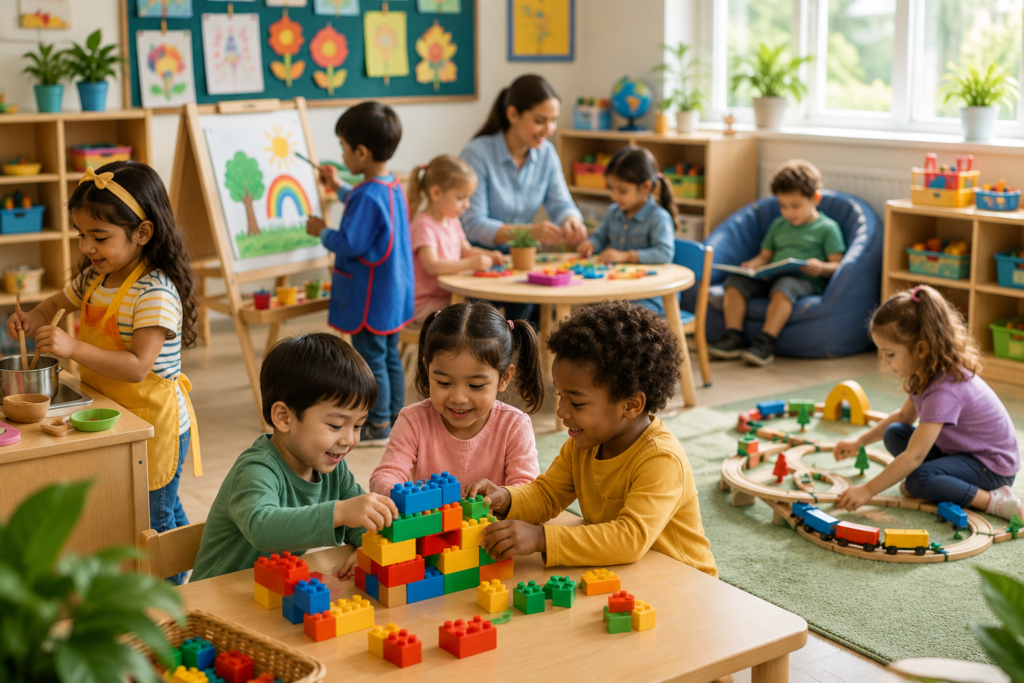
At Krazy Tots International Preschool, children enjoy a variety of activities including:
- Storytelling
- Art and craft
- Music and movement
- Outdoor games
- Interactive learning sessions
This balanced approach helps children stay engaged while developing important life skills.
Should Preschool Children Attend Full-Day Programs?
Some families require longer school hours because of work schedules. In such cases, preschool programs with daycare can be a helpful solution.
A good full-day program should include:
- Learning activities
- Rest periods
- Nutritious meals or snacks
- Outdoor play
- Quiet time
- Supervised care
The key is ensuring children have enough opportunities to rest, play, and relax throughout the day.
Benefits of the Right Preschool Schedule
When children spend the right amount of time in preschool, they often experience:
Better Learning
Short, engaging learning sessions improve focus and understanding.
Stronger Social Skills
Children interact with peers and learn how to share, communicate, and cooperate.
Increased Confidence
Completing activities independently helps children build self-esteem.
Healthy Emotional Development
Balanced schedules reduce stress and help children feel secure.
School Readiness
Children gradually adapt to routines that prepare them for future academic success.
How Krazy Tots International Preschool Supports Every Child
At Krazy Tots International Preschool in Horamavu, Bengaluru, we understand that every child develops at their own pace.
Our programs are designed to provide:
- Age-appropriate learning schedules
- Play-based education
- Safe and nurturing classrooms
- Experienced and caring teachers
- Large open play areas with covered spaces
- Personalized attention for every child
We focus on creating a positive learning experience where children enjoy coming to school every day.
Tips for Parents
If your child is starting preschool, these tips can help:
Maintain a Consistent Routine
Regular sleep and meal schedules help children adjust more easily.
Give Time to Adapt
Some children take a few days, while others may take a few weeks to settle into preschool.
Stay Positive
Children often pick up on their parents’ emotions. A positive attitude can help build confidence.
Communicate with Teachers
Regular communication helps parents understand how their child is adjusting.
How Many Hours Should a Preschool Child Spend in School FAQs
How many hours should a preschool child spend in school?
Most preschool children benefit from 2 to 4 hours of school each day, depending on their age and developmental stage.
Is full-day preschool necessary?
Not always. Many children thrive in shorter programs. Full-day options may be useful for working parents when balanced with play and rest.
What is the ideal preschool timing for a 3-year-old?
Most 3-year-olds do well with 2.5 to 3.5 hours of preschool per day.
Can a child spend too many hours in preschool?
Yes. Very long school hours without enough breaks, play, or rest may lead to tiredness and reduced engagement.
How do I know if my child is comfortable in preschool?
Children who are happy, engaged, energetic, and willing to attend school are usually adjusting well.
Final Thoughts of How Many Hours Should a Preschool Child Spend in School
There is no single answer to how many hours a preschool child should spend in school. The ideal schedule depends on the child’s age, personality, and developmental needs.
For most children, a balanced program that combines learning, play, creativity, and social interaction is more important than spending long hours in a classroom.
At Krazy Tots International Preschool in Horamavu, we create age-appropriate schedules that help children learn confidently while enjoying every moment of their early education journey.
Looking for the Right Preschool in Horamavu?
Give your child the perfect start with a safe, nurturing, and engaging learning environment at Krazy Tots International Preschool in Horamavu. Visit our campus today or call us to learn more about admissions, Nursery, LKG, UKG, and daycare programs.