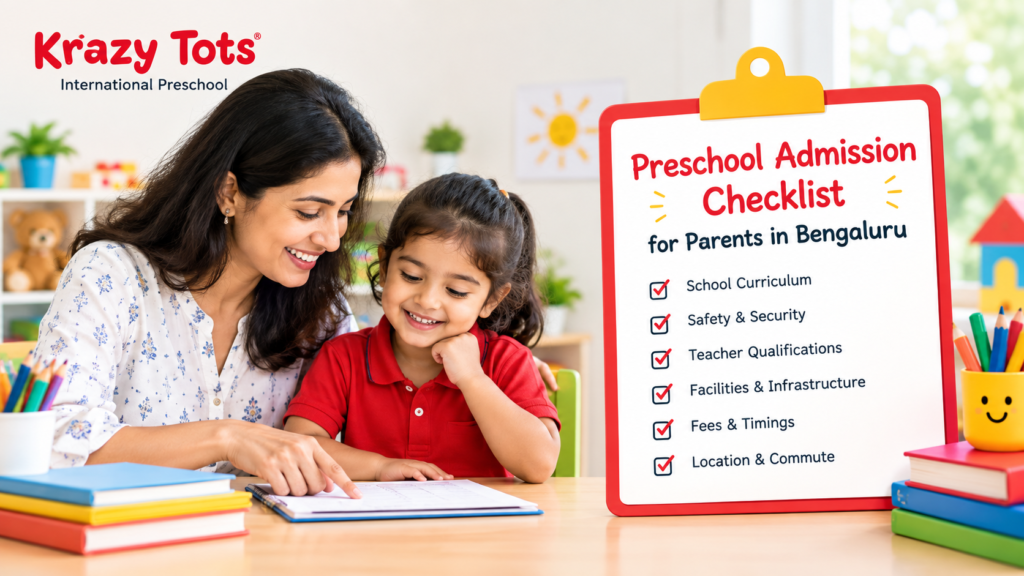
Preschool Admission Checklist for Parents in Bengaluru
Choosing a preschool is one of the first major education decisions parents make for their child. With many preschools available in Bengaluru, it can be difficult to know what to compare and what questions to ask before completing the admission process.
A good preschool admission checklist for parents in Bengaluru should cover more than fees and location. Parents should look at the school’s learning approach, teachers, safety measures, classroom environment, daily routine, play opportunities, hygiene, communication with parents, timings, and how comfortable their child feels there, Krazy Tots International Preschool.
It is easy to get attracted to a colourful website or a long list of activities. However, visiting the preschool and understanding what your child’s everyday experience will actually look like is much more useful.
Start Your Preschool Search Early
It is a good idea to start looking at preschools before you are ready to submit the admission form.
Starting early gives you enough time to understand different schools without feeling rushed. You can shortlist a few options, visit their campuses, speak to teachers, compare programmes, and think about what suits your child.
Admission timelines can differ between schools, so parents should check directly with each preschool about application dates, available seats, age requirements, and documents.
You don’t have to visit every preschool in Bengaluru. A small shortlist based on your location, child’s age, preferred timings, and learning expectations is usually a more practical starting point.
Think About the Location
Location is one of the first things parents usually consider, and for good reason.
Your child may attend preschool several days a week, so the daily journey should be manageable. A school that looks close on a map may take much longer during busy Bengaluru traffic.
Think about:
- Travel time during school hours
- Drop-off and pick-up arrangements
- Transportation options
- Who will take your child to school
- How the journey will work during rainy days
- Whether the location is convenient for your family’s routine
A nearby preschool can make mornings less stressful, but location should not be the only reason you choose a school.
Check the Age Eligibility
Before applying, check whether your child meets the school’s age requirement for the programme you are considering.
Preschools may have different age criteria for programmes such as playgroup, nursery, LKG, and UKG.
Ask the school about the required age and the relevant cut-off date. If you are unsure which programme is appropriate, discuss your child’s age and previous learning experience with the admissions team.
It is better to clarify this before filling out forms or paying admission-related fees.
Understand the Preschool’s Learning Approach
Every preschool has its own way of teaching.
Some may emphasize Montessori-inspired activities, while others may use play-based learning, theme-based activities, structured classroom routines, or a combination of different approaches.
The important thing is to understand how your child will actually learn every day.
Ask questions such as:
- How are letters and numbers introduced?
- Are children encouraged to ask questions?
- How much learning happens through activities?
- Are stories, music, art, and movement included?
- How much time do children spend outdoors?
- How does the school support different learning speeds?
For young children, learning does not need to mean sitting with a workbook for long periods.
Children can develop early academic skills through stories, games, puzzles, conversations, drawing, building activities, songs, and hands-on experiences.
Look at the Classroom
A classroom visit can tell you things that a brochure cannot.
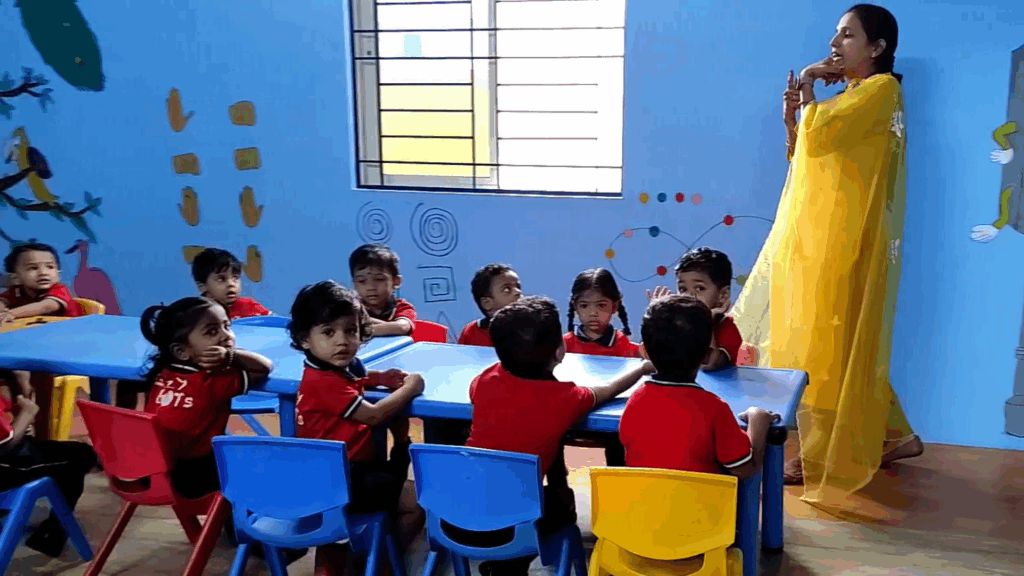
Look at the learning materials, books, toys, seating arrangements, activity areas, and overall cleanliness.
More importantly, observe the atmosphere.
Do children seem comfortable?
Are they interacting with their teachers?
Do teachers listen to children?
Does the classroom allow children to move and participate?
A good preschool classroom should feel welcoming and age-appropriate. It should provide opportunities for both structured activities and independent exploration.
Meet the Teachers
Teachers are one of the most important parts of a preschool.
Children spend a significant amount of their school day with their teachers, so parents should understand how teachers interact with young children.
During your visit, notice whether teachers speak patiently and respectfully. Ask about their experience and how they handle children who are shy, upset, very active, or taking longer to understand something.
You can also ask how teachers communicate with parents.
A good relationship between teachers and parents can make it easier to understand a child’s progress and address concerns early.
Ask About Safety
Safety should be high on every parent’s checklist.
Don’t assume that a school is safe simply because it looks well maintained. Ask how the preschool manages children’s safety throughout the day.
Find out about:
- Entry and exit procedures
- Visitor access
- CCTV monitoring
- Child supervision
- Pick-up authorization
- Emergency procedures
- First-aid arrangements
- Outdoor play supervision
- Staff training and responsibilities
Also look around the premises yourself.
Check whether play equipment, stairs, doors, classrooms, washrooms, and other areas appear suitable for young children.
If you have specific concerns, ask the school directly rather than relying on assumptions.
Check the Cleanliness and Hygiene
Young children spend several hours at preschool, so hygiene is another important consideration.
During your visit, look at the classrooms, washrooms, activity areas, and play spaces.
Ask how frequently common areas are cleaned and how the school handles situations when a child becomes unwell.
You can also ask about handwashing routines and drinking water facilities.
The goal isn’t to expect a completely sterile environment. Children naturally play, explore, and get messy. What matters is that the school has sensible hygiene practices and maintains a clean environment.
Understand the Daily Routine
Ask what a normal preschool day looks like.
A good routine for young children usually includes a mixture of learning, play, movement, creative activities, social interaction, breaks, and rest where appropriate.
Children benefit from knowing what to expect during their day.
For example, a routine might move from arrival and free play to group activities, stories, outdoor play, creative work, and other classroom experiences.
The exact schedule will vary from one school to another.
What matters is whether the routine is suitable for your child’s age and gives them enough variety.
Don’t Forget About Outdoor Play
Outdoor play is an important part of early childhood.
Running, climbing, balancing, throwing, catching, and other physical activities help children develop coordination and confidence.
Outdoor play also gives children an opportunity to interact with classmates in a different setting.
When visiting a preschool, don’t simply ask whether it has a playground.
Ask:
How often do children use the outdoor space?
What kind of activities do they do there?
How are children supervised?
A large play area can be useful, but the quality of the experience depends on how it is used.
Ask About Activities Beyond Academics
Preschool should not be focused only on letters, numbers, and writing.
Children also need opportunities to explore creativity, music, movement, communication, social interaction, and imagination.
Ask whether the school includes activities such as:
- Art and craft
- Storytelling
- Music and rhymes
- Dance and movement
- Role play
- Puzzles
- Building activities
- Outdoor games
- Group projects
- Nature-related activities
These experiences can help children develop different skills while keeping learning enjoyable.
Check the Class Size
Class size can affect how much individual attention a teacher can provide.
Ask how many children are usually in a class and how many teachers or support staff are present.
A smaller class is not automatically better, but teachers should have enough time to notice children’s needs.
Think about whether a teacher can help a child who is struggling with an activity, comfort a child who is upset, and still manage the rest of the classroom.
This is particularly important for younger children who may need more adult support.
Understand How the School Handles Separation
Starting preschool can be emotional for both children and parents.
Some children happily walk into the classroom on the first day. Others may cry or hold onto their parents.
Ask the preschool how they help children settle into the new environment.
You can ask whether there is a settling-in process, how teachers respond to separation anxiety, and how parents are informed if their child is having a difficult day.
A supportive approach can make the first few weeks easier.
Ask How Parents Receive Updates
Good communication helps parents stay connected with their child’s preschool experience.
Ask how the school shares information about daily activities and progress.
Some schools may use parent communication apps, messages, meetings, activity updates, or regular teacher interactions.
Find out how you can contact the teacher or school if you have a concern.
You should also understand how the school communicates important announcements, holidays, events, and changes to routines.
Review the Preschool Timings
School timings should fit into your family’s daily routine.
Check the regular school hours and ask about arrival and pick-up windows.
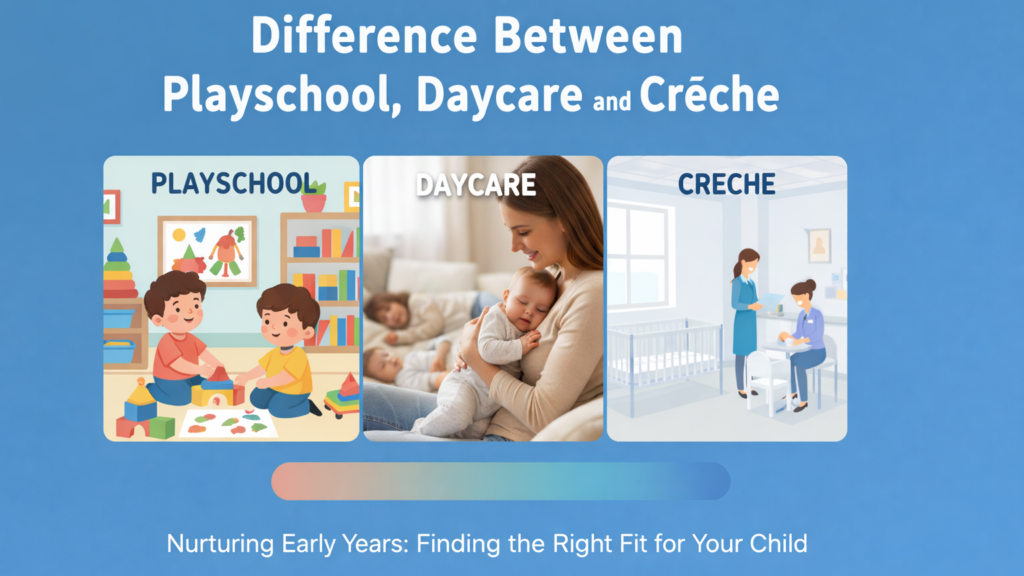
If you are a working parent, you may also want to ask whether the preschool offers daycare or extended care.
If daycare is available, understand its timings, activities, supervision, meals, and additional charges separately from the preschool programme.
This is especially useful for parents who need a longer care schedule.
Understand the Complete Fee Structure
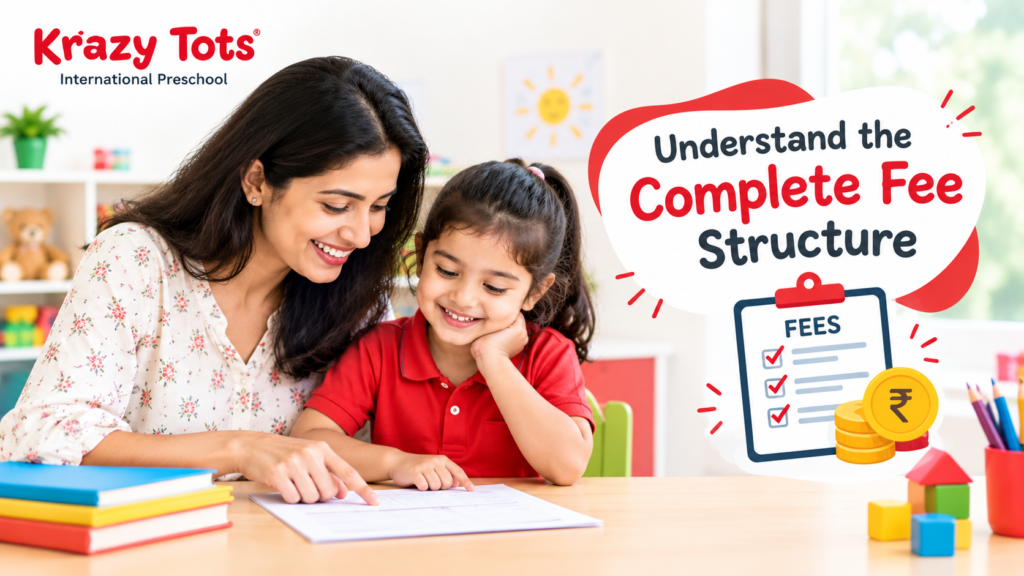
Fees are an important part of preschool admission, but parents should look at the complete cost rather than just the advertised amount.
Ask whether there are separate charges for:
- Admission
- Tuition
- Books and learning materials
- Uniform
- Activities
- Transportation
- Meals
- Events
- Daycare or extended care
Request a clear fee structure so you know what is included.
A school with higher fees is not automatically better, and a lower fee does not necessarily mean lower quality. Compare what each preschool provides and whether it matches your family’s needs.
Keep the Admission Documents Ready
Once you have decided on a preschool, the next step is completing the admission process.
The exact requirements vary by school, but parents may commonly be asked for documents or information such as:
- Child’s birth certificate
- Passport-size photographs
- Parent or guardian details
- Address information
- Previous school details, if applicable
- Medical or vaccination information where required
- Emergency contact details
Always check the school’s current document requirements rather than preparing based on another school’s admission process.
Keep digital and physical copies organized so the application is easier to complete.
Read the School Policies
Before completing admission, take time to understand the school’s basic policies.
Ask about attendance, holidays, sick-child policies, late pick-up, transportation, meals, parent visits, and communication.
If your child has a particular dietary requirement, allergy, learning need, or daily routine that the school should know about, discuss it with the school before admission.
Clear communication at this stage can prevent confusion later.
Visit the Preschool With Your Child
One of the most useful things parents can do is visit the shortlisted preschool with their child.
Don’t focus only on what the admissions team tells you.
Watch your child’s reaction.
Does your child seem curious about the classroom?
Do they want to look at the toys or books?
Are they comfortable talking to the teacher?
A child may still feel nervous during the first visit, and that is perfectly normal. You are simply looking for signs that the environment could become comfortable for them over time.
Make a Simple Comparison Before Deciding
After visiting different schools, it can be helpful to write down what you liked and disliked about each one.
You can compare:
| What to Check | School A | School B | School C |
|---|---|---|---|
| Location and travel time | |||
| Teaching approach | |||
| Teacher interaction | |||
| Safety | |||
| Classroom environment | |||
| Outdoor play | |||
| Daily routine | |||
| Class size | |||
| Timings | |||
| Fees | |||
| Parent communication | |||
| Child’s comfort |
This simple comparison can help you make a decision based on the overall picture rather than one impressive feature.
Consider Krazy Tots International Preschool
Parents looking for a preschool in Bengaluru can also consider Krazy Tots International Preschool as one of their options.
Krazy Tots focuses on play-based learning and provides children with opportunities to participate in classroom activities, storytelling, creative experiences, group interaction, and physical play. The school also has a spacious campus with a large covered play area where children can enjoy active experiences.
Parents can visit the school, understand the daily routine, speak with teachers, and see the learning environment before making their decision.
A Simple Preschool Admission Checklist
Before you finalize admission, make sure you have thought about these areas:
School and location
- Is the school conveniently located?
- Is the daily travel manageable?
- Are the school timings suitable?
Learning
- Is the teaching approach suitable for young children?
- Are play and activities part of learning?
- Does the school encourage curiosity and communication?
Teachers
- Are teachers patient and approachable?
- Can children receive individual attention?
- How does the school communicate with parents?
Safety and hygiene
- What are the school’s safety procedures?
- How are children supervised?
- Are classrooms and washrooms clean and age-appropriate?
Child’s experience
- Does your child seem comfortable?
- Will they have opportunities to play and interact?
- Does the environment feel welcoming?
Admission
- What documents are required?
- What are the complete fees?
- Are there additional charges?
- What are the school’s policies?
You don’t need to find a school that checks every box perfectly. The goal is to find a school that provides a safe, supportive, enjoyable environment that fits your child’s needs and your family’s routine.
Preschool Admission Checklist for Parents FAQs
When should parents start looking for a preschool?
It is helpful to start researching early so you have enough time to compare schools, visit campuses, understand admission procedures, and check availability.
What documents are usually required for preschool admission?
Requirements vary by school. Parents may commonly need the child’s birth certificate, photographs, parent details, address information, and other documents requested by the preschool.
What should I ask during a preschool visit?
Ask about the curriculum, teachers, class size, safety, hygiene, daily routine, outdoor play, fees, timings, parent communication, and how the school helps children settle in.
Is location important when choosing a preschool?
Yes. A manageable daily commute can make mornings easier for both parents and children. However, location should be considered alongside teaching quality, safety, and the child’s comfort.
Should I take my child when visiting a preschool?
Yes, if the school permits it. Your child’s reaction to the classroom, teachers, and surroundings can provide useful information about how comfortable they may eventually feel there.
How do I know if a preschool is right for my child?
Look at the complete experience rather than one feature. Consider the teachers, learning approach, safety, classroom environment, play opportunities, routine, fees, location, and your child’s comfort.
Final Thoughts
Choosing a preschool in Bengaluru can take some time, but careful preparation makes the process much easier.
Don’t choose a school only because it is close to home, has attractive facilities, or is popular among other parents. Look at the everyday experience your child will have, Krazy Tots International Preschool.
Visit the school. Observe the classrooms. Speak with teachers. Ask about safety and learning. Understand the complete fee structure. Think about travel and timings. Most importantly, consider whether your child feels comfortable in the environment.
Preschool is not about making children study all day. It is about giving them a positive beginning to their educational journey.
When children feel safe, encouraged, and interested in what they are doing, they can gradually develop the confidence and independence they need for the years ahead.