01
Expand Your Child’s Words into Sentences
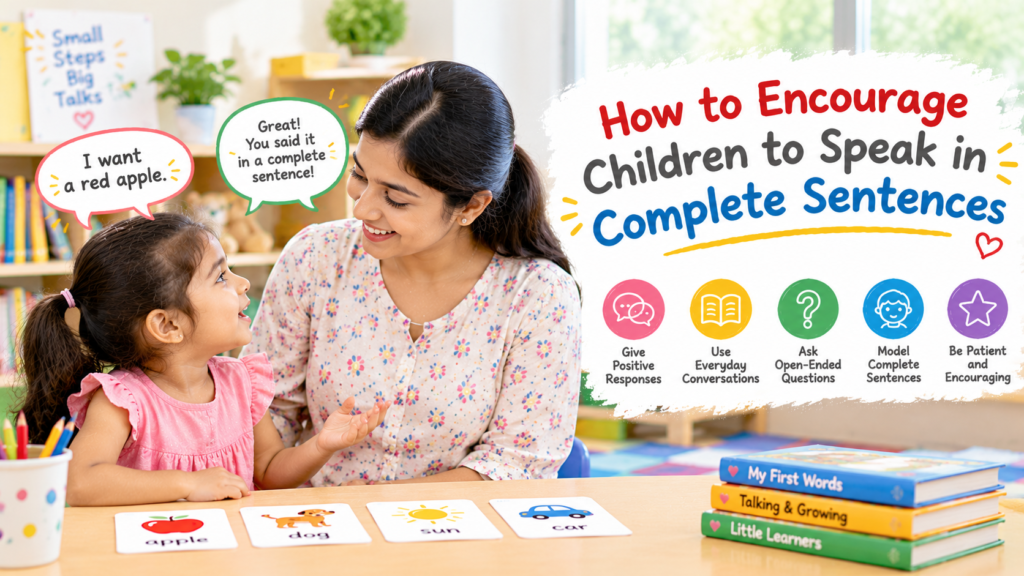
When your child uses a single word or short phrase, respond with a slightly longer sentence. If your child says “Dog running,” you can say, “Yes, the dog is running fast.”
02
Ask Questions That Invite Longer Answers
Questions can encourage children to explain their thoughts. Instead of asking only questions that need a yes or no answer, try asking, “What did you build with the blocks?”
03
Talk About Everyday Activities
Daily routines provide many opportunities to introduce sentence patterns. While getting dressed, eating breakfast, or travelling to preschool, describe what is happening.
04
Read Picture Books Together
Picture books encourage children to describe people, objects, actions, and events. Pause on a page and ask, “What is the girl doing?” If your child says “Eating,” you can model, “The girl is eating an apple.”
05
Encourage Pretend Play
laying shopkeeper, doctor, teacher, or chef gives children a reason to use language. During pretend shopping, your child might say, “Apple please.” You can respond,
06
Listen Patiently and Give Children Time
Some children need extra time to organise their thoughts before speaking. Avoid finishing every sentence for your child or repeatedly asking them to say something again.
COMMON MISTAKES TO AVOID WHEN TEACHING SENTENCE SKILLS
Parents can support language development more effectively by keeping conversations relaxed and encouraging.
Avoid forcing your child to repeat every sentence. Repetition can sometimes be useful, but constantly asking children to say something again may make conversations stressful.
Do not compare your child’s speech with another child’s speech. Children develop language at different rates, and comparisons do not explain what an individual child needs.
Avoid speaking only in questions. Children also need to hear natural sentences, descriptions, stories, and explanations.
Do not correct every grammar mistake. Respond with the correct sentence naturally instead of stopping the conversation to point out errors.
Avoid answering too quickly for your child. Give them a few moments to think and organise their words.
Do not assume a child is not listening because they speak briefly. Understanding language and expressing language are related but different skills. If you have concerns, discuss them with a qualified professional.
HOW PRESCHOOL SUPPORTS LANGUAGE DEVELOPMENT
Learning to Communicate Through Play and Interaction
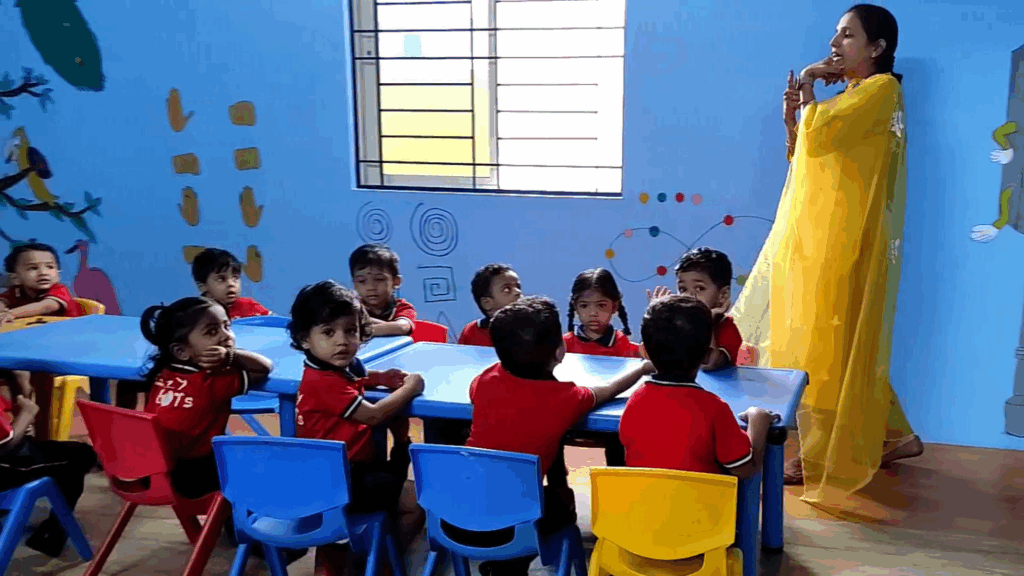
Preschool provides children with opportunities to hear and use language in different situations. Storytelling, group discussions, music, pretend play, and conversations with teachers and classmates all create opportunities to practise expressing ideas.
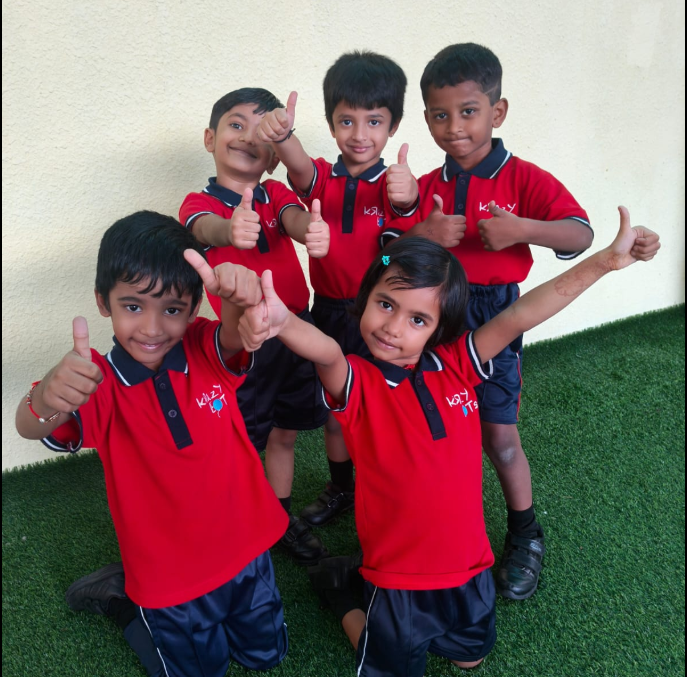
At Krazy Tots International Preschool in Horamavu, Bangalore, age-appropriate learning experiences can encourage children to communicate, listen to others, describe what they notice, and participate in group activities. These everyday interactions give children meaningful reasons to use words and sentences.
For example, during a picture discussion, children can describe what they see. During pretend play, they can practise asking for an object or explaining what they are doing. During storytelling, they can talk about characters and events.
Every child has a different communication style. A supportive environment gives children opportunities to speak at their own pace while encouraging them to express themselves more clearly.