01
Observation Skills
Children learn to notice colours, shapes, sizes and other details when comparing objects.
02
Visual Discrimination
Matching similar pictures or identifying objects that look different helps children recognise small visual differences.
03
Logical Thinking
Sorting objects into groups encourages children to think about why certain items belong together.
04
Early Maths Skills
Grouping, comparing and matching introduce concepts such as same, different, more, fewer, big and small.
05
Language Development
Talking about objects helps children learn descriptive words such as round, square, red, soft, large and small.
06
Concentration and Persistence
Finding matching pairs or completing a sorting activity encourages children to focus, try different approaches and continue working towards a goal.
What Do Children Learn Through Sorting and Matching?
Sorting and matching activities support several areas of early development at the same time.
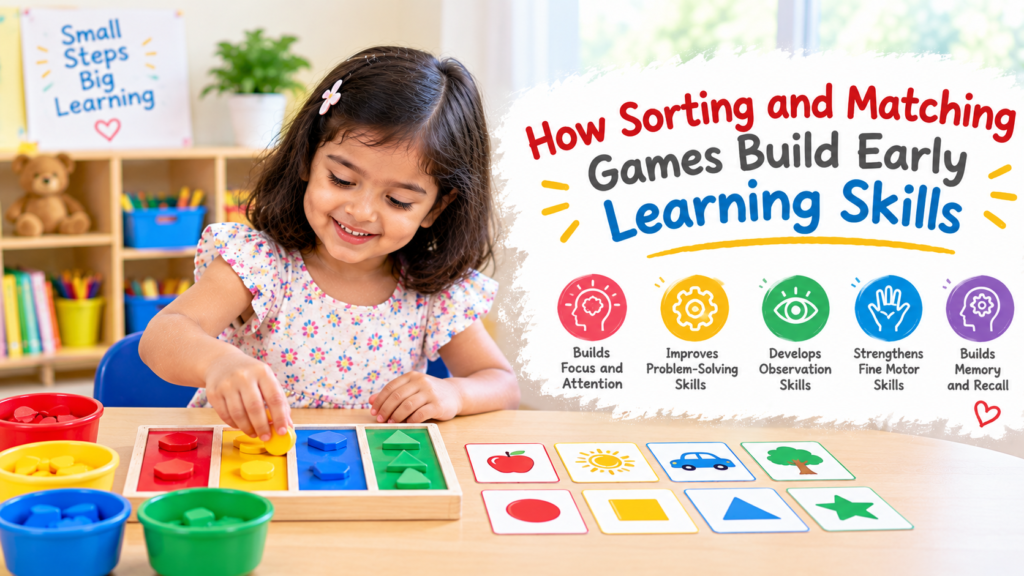
Thinking and problem-solving: Children observe objects, compare their features and decide how to group them. They also learn that the same objects can be sorted in different ways.
Early maths: Grouping and comparing introduce ideas such as same and different, more and fewer, size, shape and patterns.
Language and communication: When adults talk with children during games, children hear and practise words that describe colours, shapes, textures and relationships.
Memory and attention: Finding matching pairs encourages children to remember what they have seen and pay attention to details.
Fine motor development: Picking up, moving and placing objects gives children opportunities to practise controlled hand and finger movements.
Confidence and independence: Completing a simple activity gives children a chance to make decisions, try again and feel proud of their efforts.
Children do not need to master all these skills in one activity. Repeated opportunities to play with different materials help them build understanding gradually.
How Preschool Supports Sorting and Matching Skills
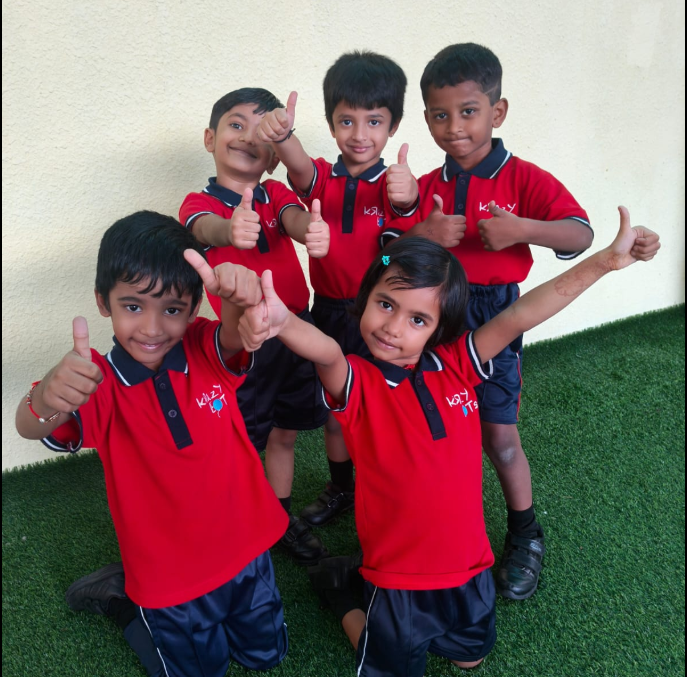
At Krazy Tots International Preschool, early learning includes opportunities for children to explore, compare, create and practise important developmental skills through age-appropriate activities.
From Nursery to LKG and UKG, children can gradually develop skills related to colour recognition, shape identification, classification, patterns, early maths, language and independent thinking.
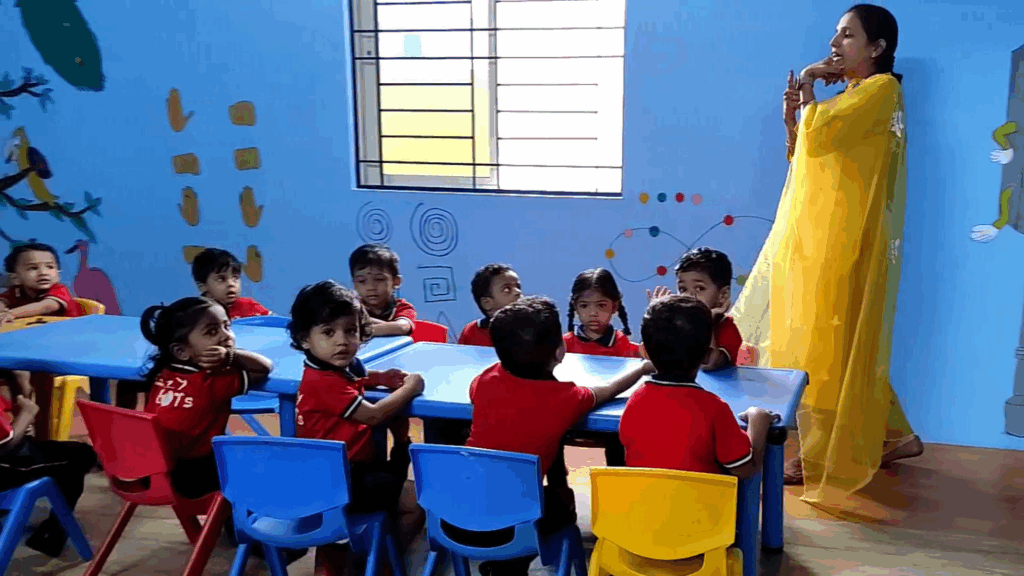
Teachers can introduce sorting and matching through blocks, picture cards, puzzles, classroom materials and everyday routines. These activities allow children to learn by handling objects, asking questions and trying different solutions.
For example, one child may begin by matching identical pictures, while another may be ready to sort objects according to two features, such as colour and shape. Activities can be adapted to suit children’s individual abilities and progress.
A balanced preschool experience combines guided learning with creative play, movement, stories and social interaction. This gives children opportunities to practise new skills while enjoying the process of discovery.
The aim is to help children become curious, confident learners who are comfortable observing, thinking and exploring new ideas.