01
Sing songs and nursery rhymes
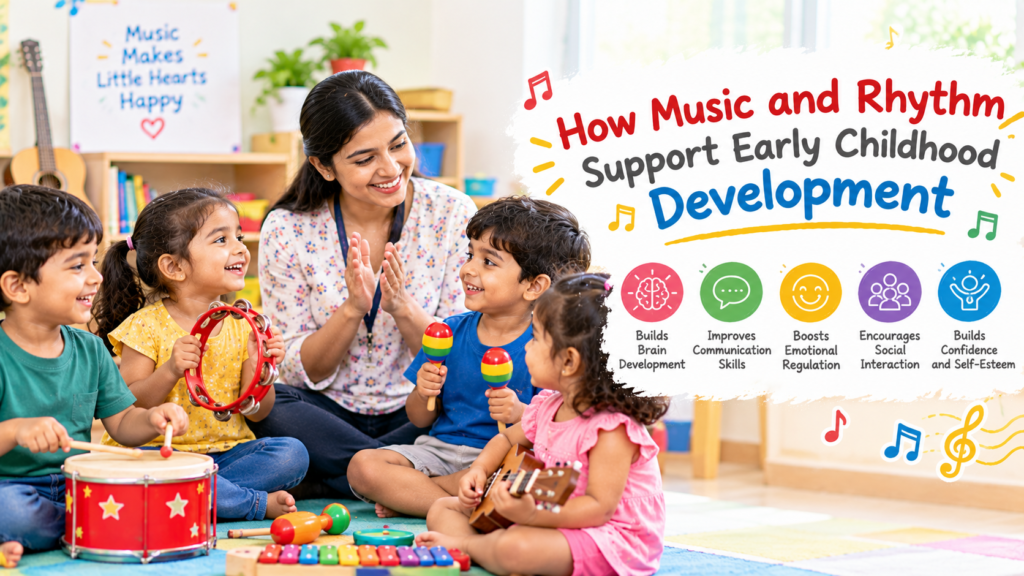
Singing familiar songs helps children hear new words, repeat sounds, and practise pronunciation. Choose simple nursery rhymes and encourage your child to sing.
02
Clap along to a rhythm
Clap slowly, clap quickly, or create a simple pattern for your child to copy. This encourages children to listen carefully, notice patterns.
03
Dance to different types of music
Play cheerful music and let your child move freely. Encourage them to stretch, march, turn around, or move like different animals.
04
Explore simple musical instruments
Give your child child-safe instruments such as small drums, shakers, or tambourines. Let them experiment with loud and soft sounds, fast and slow rhythms.
05
Play musical listening games
Try a simple game where your child moves while the music plays and freezes when it stops. You can also ask them to identify familiar sounds or copy a short rhythm.
06
Use songs to express feelings
Sing gentle songs during quiet moments and lively songs during active play. Ask your child whether a piece of music sounds happy, calm, or exciting.
How preschool supports learning through music and movement
Learning through songs, rhythm, and play
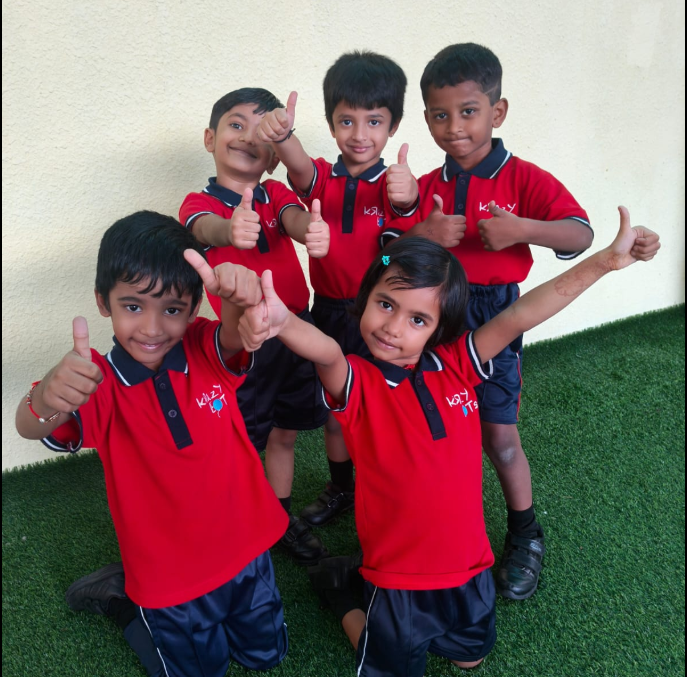
Preschool gives children opportunities to experience music in a social and supportive environment. Singing together, participating in action songs, listening to stories with rhythm, and moving to music allow children to practise different skills while interacting with their classmates.
At Krazy Tots International Preschool in Horamavu, Bangalore, early learning experiences can encourage children’s communication, creativity, listening, and participation through age-appropriate activities. Songs, rhymes, movement, and guided play can help children explore language and express their ideas in enjoyable ways.
Group music activities also introduce children to taking turns, following shared instructions, listening to others, and working together. Children can clap to a common beat, sing familiar songs, or perform simple movements as a group.
These experiences connect language, physical movement, creativity, and social development without making learning feel like a formal lesson.
Every child responds to music differently. Some children may enjoy singing aloud, while others prefer listening, moving quietly, or exploring sounds independently. Giving each child time and space to participate in their own way helps build confidence.
Common mistakes to avoid when introducing music activities
Music should be an enjoyable experience rather than a performance children feel pressured to get right. A few simple adjustments can help make music activities more comfortable and beneficial.
Playing music too loudly: Keep the volume comfortable and protect children’s hearing, especially when using speakers or musical instruments.
Expecting every child to sing or dance: Some children may prefer listening before joining in. Encourage participation without forcing them to perform.
Making rhythms too complicated: Begin with simple clapping patterns and familiar songs. Introduce more challenging activities gradually.
Correcting every mistake: Children may sing unfamiliar words or create their own rhythms. Allow them to experiment and enjoy the process instead of focusing on perfection.
Using screens as the main music activity: Videos and recorded songs can be useful, but they should not replace singing together, moving, playing instruments, and interacting with others.
Focusing only on academic benefits: Music is also a way for children to enjoy themselves, express feelings, and explore creativity. Let play remain an important part of the experience.
Keeping children seated for too long: Preschoolers benefit from movement. Include opportunities to dance, march, clap, stretch, and move freely during music activities.
Professional early childhood learning
At Krazy Tots International Preschool, early learning provides opportunities for children to explore, create, communicate, and practise important developmental skills through age-appropriate activities.
From Nursery to LKG and UKG, children gradually develop skills related to early literacy, listening, communication, coordination, and classroom independence.
Music, movement, storytelling, and creative play can give children meaningful opportunities to recognise sounds, practise new words, follow simple patterns, and express their ideas. These activities can be adapted to suit different ages, interests, and developmental stages.
A balanced preschool experience combines hands-on exploration, creative expression, physical movement, and early academic learning to support children’s overall development.