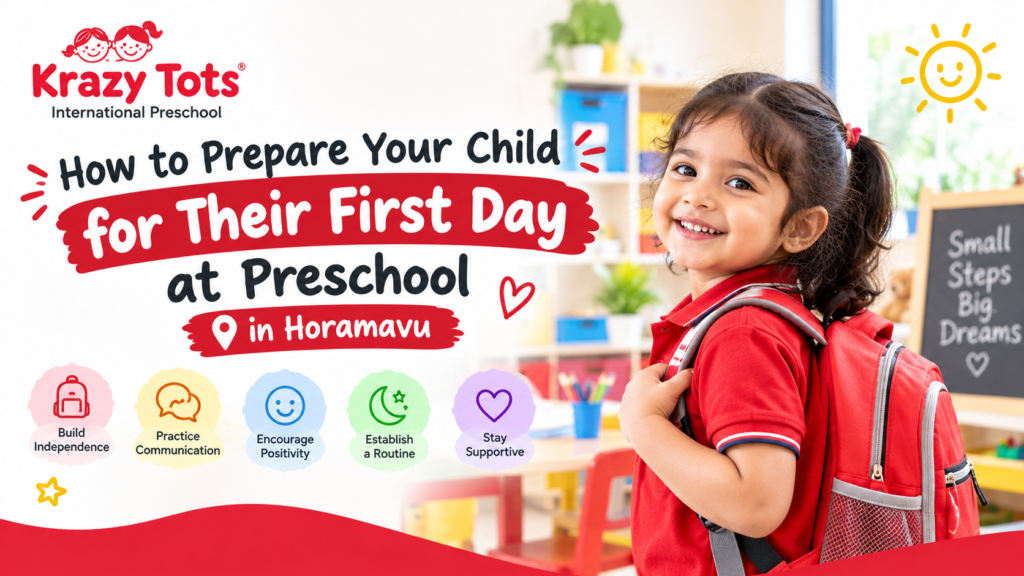
How to Prepare Your Child for Their First Day at Preschool in Horamavu
Starting preschool is a big step for a child. For some children, it feels exciting because they get to meet new friends, play with toys, and explore a new place. For others, leaving parents for the first time can feel difficult. Both reactions are completely normal.
The best way to prepare your child for their first day at preschool in Horamavu is to make the transition familiar, positive, and relaxed. Talk about school at home, establish a comfortable routine, visit the preschool before joining, and give your child plenty of reassurance without making the first day feel stressful.
Krazy Tots International Preschool
Start Talking About Preschool Before the First Day
Children feel more comfortable with things they already know.
A few days or weeks before preschool begins, casually talk about what school might be like. You can say, “You will have a classroom where you can play and learn,” or “Your teacher will help you when you need something.”
Try not to overload your child with too many instructions. Simple conversations during everyday activities work better.
You can also tell a small story about a child going to school. This helps preschool become something familiar rather than something unknown.
Most importantly, avoid using school as a threat. Saying things like “If you don’t listen, your teacher will scold you” can create unnecessary fear. Instead, help your child see preschool as a safe place where they can learn, play, and meet other children.
Visit the Preschool Together
If possible, take your child to the preschool before the actual first day.
Let them see the classroom, playground, toys, books, and other areas. If the school allows it, introduce your child to the teacher. Even a short visit can make a big difference because the surroundings will no longer feel completely new.
For parents in Horamavu, this is also a good opportunity to understand practical details such as travel time, traffic during school hours, drop-off arrangements, and what your child should carry.
When the first morning arrives, your child may recognize the building and remember, “I have been here before.”
That small feeling of familiarity can make the transition easier.
Help Your Child Get Used to a School-Day Routine
A sudden change in sleeping and waking times can make the first few days harder.
Before preschool starts, gradually move your child’s routine closer to the school schedule. Try to keep bedtime, waking time, breakfast, bath time, and getting dressed reasonably consistent.
Children don’t need a perfect timetable. What matters is having a predictable rhythm.
A simple morning might look like:
Wake up → freshen up → breakfast → get dressed → pack the bag → leave for school.
When children know what comes next, mornings often become calmer.
Let Your Child Practice Small Things Independently
Preschool is also about learning to do little things without constant help from parents.
Before the first day, give your child opportunities to practice simple tasks such as wearing shoes, opening their lunch box, drinking from their water bottle, keeping toys away after playing, washing their hands, and telling an adult when they need help.
Don’t worry if your child cannot do everything independently.
The goal isn’t to make your child completely self-sufficient before preschool. It is simply to give them confidence to try.
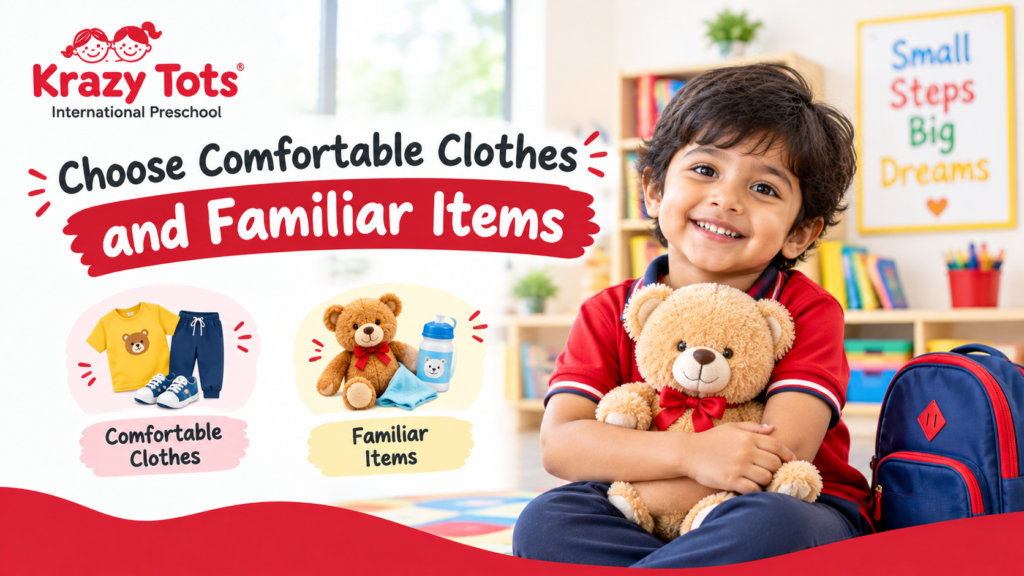
Choose Comfortable Clothes and Familiar Items
The first day is not the best time to experiment with uncomfortable clothes or unfamiliar shoes.
Choose clothing that allows your child to move, play, and sit comfortably. If the preschool has a uniform, let your child try it on beforehand.
The same applies to the school bag and water bottle.
Allow your child to see and use these things before school begins. If they have a favourite small comfort item and the preschool permits it, you can discuss with the teacher whether it can be brought during the initial adjustment period.
Keep the Goodbye Short and Positive
This can be one of the hardest moments for parents.
Your child may cry when you say goodbye. You may feel like staying longer will make them feel better. Sometimes, however, a long and emotional goodbye can make separation more difficult.
Give your child a warm hug, reassure them, and confidently tell them when you will return.
For example:
“Have fun with your teacher. I will come back after school.”
Then leave according to the school’s drop-off process.
Avoid repeatedly coming back after saying goodbye. Children can become more anxious when they see a parent leave and return several times.
What If Your Child Cries on the First Day?
Crying does not automatically mean that your child is unhappy at preschool.
For many children, crying is simply their way of expressing, “I don’t want you to leave me.”
Some children settle within a few minutes after their parents leave. Others may need more time.
Instead of asking repeatedly, “Did you cry today?”, try asking open and positive questions later:
“What did you play with today?”
“Who did you meet?”
“What did you like in your classroom?”
This can encourage your child to talk about the enjoyable parts of the day.
Be Careful About Making Big Promises
Parents sometimes say things like, “I promise I’ll stay outside your classroom all day,” because they want their child to stop crying.
But if the school does not allow this, the child may feel confused when the parent leaves.
It is better to give simple, truthful reassurance.
Tell your child that you will come back after school and explain the routine in a way they can understand.
Children slowly learn that going to preschool does not mean their parents have disappeared. They learn that parents leave and return.
Prepare for Horamavu’s Weather and Traffic
Getting ready for preschool in Horamavu also means thinking about the practical side of the morning.
Rainy days can make travel slower, while busy roads can make a normally short journey take longer. During hot weather, children may become uncomfortable if they have to wait outside for long periods.
Try to leave home with enough time rather than rushing at the last minute.
Pack the items your preschool has requested and check the weather before leaving. A calm journey can help your child arrive at school in a better mood.
Talk to the Teacher About Your Child
Parents often know small details about their children that can help teachers understand them better.
Let the teacher know if your child is shy around new people, needs help communicating something, takes time to become comfortable in new surroundings, or has a particular comfort routine.
You don’t need to give a long list of instructions.
A few useful details can help the teacher respond to your child more naturally.
Don’t Compare Your Child With Other Children
One child may walk into the classroom happily on the first day.
Another may hold their parent’s hand tightly and cry.
Another may remain quiet for several days before becoming more social.
None of these reactions means that one child is “better” at preschool.
Every child has their own personality and pace.
Instead of saying, “Look, that child isn’t crying,” reassure your child in their own moment. Give them time to develop confidence without comparison.
Give Your Child Time to Adjust
The first day is only the beginning.
Your child may need several days or even a few weeks to become fully comfortable with the new routine. You may notice small changes over time—walking into class more confidently, talking about friends, remembering the teacher’s name, or becoming excited about a particular activity.
Celebrate these little steps.
A child who once cried at the classroom door may eventually run inside without looking back. That change often happens gradually.
Preparing Your Child for Preschool at Krazy Tots
At Krazy Tots International Preschool, children get opportunities to learn through play, interaction, exploration, and everyday classroom experiences. A familiar routine and supportive environment can help children gradually become comfortable with their teachers, classmates, and activities.
For parents looking for a preschool in Horamavu, choosing a school where your child feels comfortable is just as important as looking at the curriculum or facilities.
Parents can visit Krazy Tots, understand the daily routine, speak with the teachers, and see the learning environment before making a decision.
How to Prepare Your Child for Their First Day at Preschool FAQs
When should I start preparing my child for preschool?
You can start a few weeks before school begins. Begin with simple conversations, visits to the preschool, and small changes to the daily routine.
What should I do if my child cries when I leave?
Stay calm, give a short reassuring goodbye, and follow the school’s drop-off routine. Many children settle after their parent leaves.
Should I stay in the classroom with my child?
This depends on the preschool’s settling-in approach. Some schools may allow gradual familiarization, while others have a clear drop-off routine.
How long does it take for a child to adjust to preschool?
There is no fixed timeline. Some children settle quickly, while others need several weeks. Consistency and reassurance can make the transition easier.
What should I tell my child about preschool?
Keep it simple and positive. Talk about the teacher, classroom, toys, activities, friends, and the fact that you will return after school.
Final Thoughts
Preparing your child for their first day at preschool does not mean making sure they never cry or feel nervous. It means helping them understand that preschool is a safe and familiar part of their new routine.
Talk positively about school, visit beforehand, practice simple routines at home, keep mornings calm, and give your child time to adjust.
Most importantly, Krazy Tots International Preschool trust the process. The first day may not be perfect, and it doesn’t need to be. What matters is that your child gradually begins to feel safe, confident, and happy in their new environment.