01
Plant seeds in small pots
Give your child a small pot, some soil, and easy-to-grow seeds. Help them place the seeds in the soil, cover them gently, and water them.
02
Water plants together
Children enjoy activities that allow them to do things independently. Give your child a small watering can or a child-safe container and show them how to water plants gently.
03
Explore leaves and flowers
Take your child around the garden and observe the different plants. Talk about the colours, shapes, sizes, and textures of leaves and flowers.
04
Grow vegetables and herbs
Growing familiar plants can make gardening especially exciting. Try easy-to-grow options such as coriander, fenugreek, or green gram, depending on the season and growing conditions.
05
Collect and sort natural objects
Invite your child to collect safe, fallen leaves, small twigs, or petals from the ground. Help them sort the items by colour, shape, or size. This turns an outdoor activity into an opportunity to practise observation, classification, and early maths.
06
Create a mini garden
Set aside a small space or a few containers for your child to care for. Let them help choose the pots, arrange the plants, and decorate the garden with child-safe materials.
How preschool supports learning through nature
Learning through gardening, exploration, and play
Preschool gives children opportunities to explore the world beyond books and classroom materials. Nature-based activities allow them to ask questions, observe changes, work with others, and learn through direct experience.
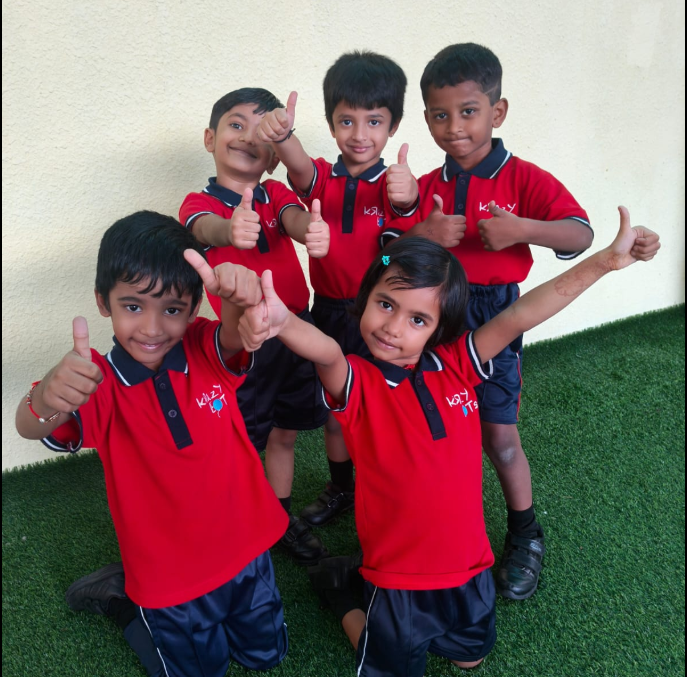
At Krazy Tots International Preschool in Horamavu, Bangalore, early learning experiences can encourage curiosity, creativity, communication, and hands-on exploration. Activities involving plants, natural materials, observation, and guided play can help children connect everyday experiences with early learning concepts.
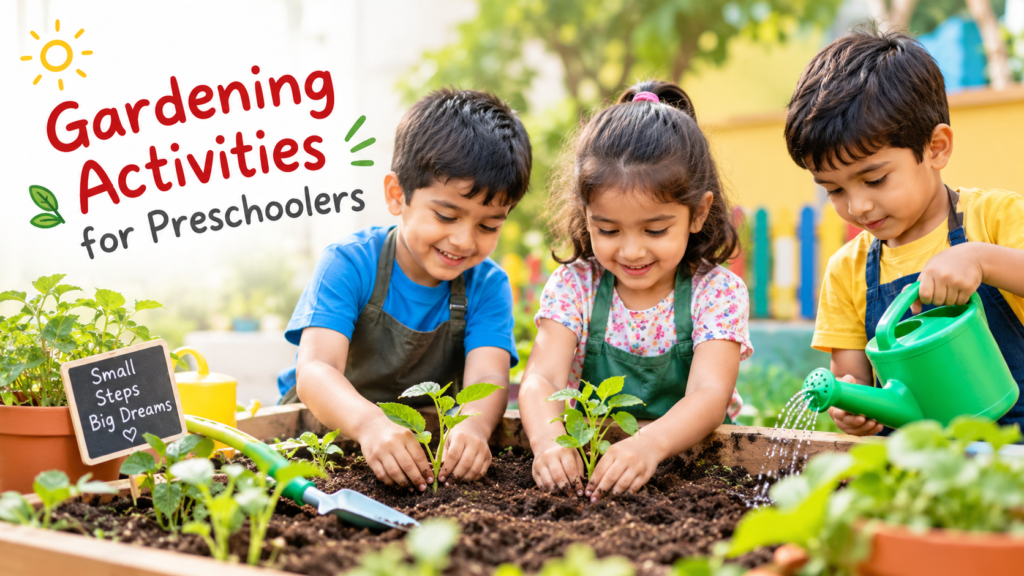
Gardening can also create opportunities for group participation. Children can take turns watering plants, share what they have observed, count seeds together, and talk about the changes they notice.
These experiences help connect early science, language, maths, and social development in a way that feels natural and enjoyable.
Every child learns at a different pace. Giving children time to explore, ask questions, make discoveries, and try again helps them develop confidence without unnecessary pressure.
Common mistakes to avoid when introducing gardening activities
Gardening should be an enjoyable experience rather than another task children feel they must complete perfectly. A few simple adjustments can make these activities safer and more rewarding.
Expecting quick results: Seeds need time to grow. Help children observe small changes instead of expecting a plant to appear immediately.
Giving children too much responsibility: Young children need adult guidance. Start with small tasks, such as adding soil or watering with help.
Correcting every little mistake: Spilled soil or unevenly planted seeds are part of learning. Let children try, explore, and improve with gentle guidance.
Using sharp or unsuitable tools: Choose age-appropriate, child-safe gardening tools and supervise children throughout the activity.
Ignoring plant safety: Some plants, seeds, fertilisers, and garden chemicals can be harmful. Choose suitable plants, keep chemicals out of reach, and supervise children around soil and plants.
Making gardening too complicated: Children do not need perfect flower beds or elaborate projects. A small pot and a few seeds can provide plenty of opportunities to learn.
Forgetting handwashing: Encourage children to wash their hands thoroughly after handling soil and plants, and keep gardening materials away from food preparation areas.
Professional early childhood learning
At Krazy Tots International Preschool, early learning provides opportunities for children to explore, create, communicate, and practise important developmental skills through age-appropriate activities.
From Nursery to LKG and UKG, children gradually develop skills related to early literacy, counting, fine motor control, communication, and classroom independence.
Hands-on activities can help children connect what they see in the world around them with what they learn. Nature exploration, creative play, observation, and simple group tasks provide opportunities to practise these skills in meaningful ways.
A balanced preschool experience combines active play, creative expression, guided exploration, and early academic learning to support children’s overall development.