Is Your Child Ready for Preschool? 15 Signs Parents Should Know
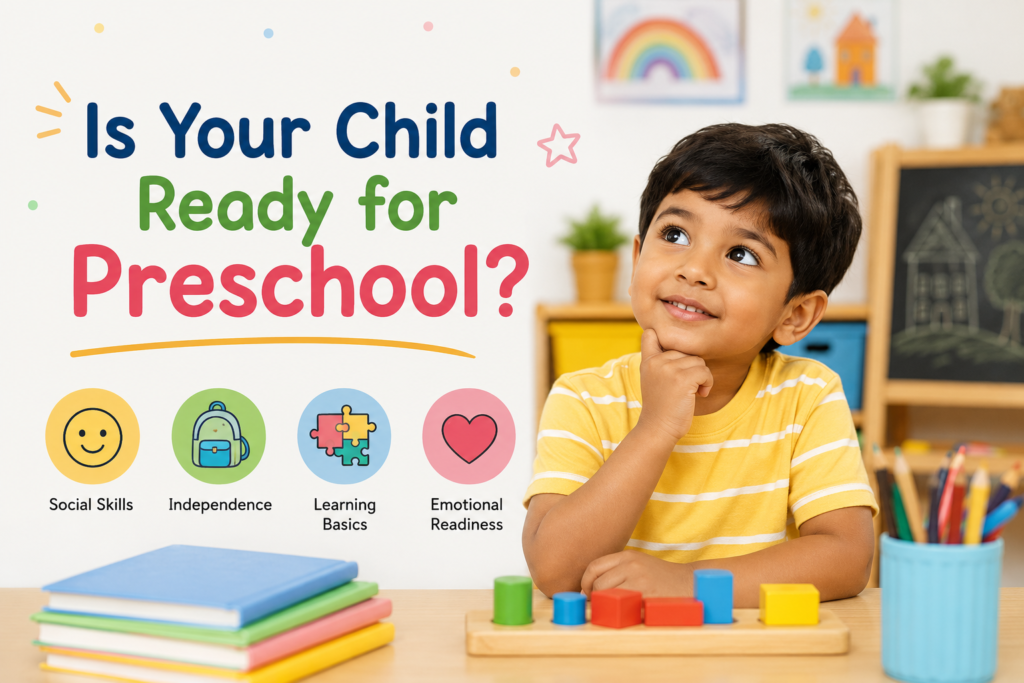
Every parent reaches a point where they wonder, “Is my child ready for preschool?” It is one of the most common questions parents ask before starting their child’s early learning journey.
The truth is that every child develops at their own pace. Some children are ready for preschool at the age of 2.5 years, while others may need a little more time. Readiness is not about whether your child knows the alphabet or can count to 100. It is about emotional, social, physical, and communication development.
If your child shows most of the signs below, they are likely ready to enjoy and benefit from preschool.
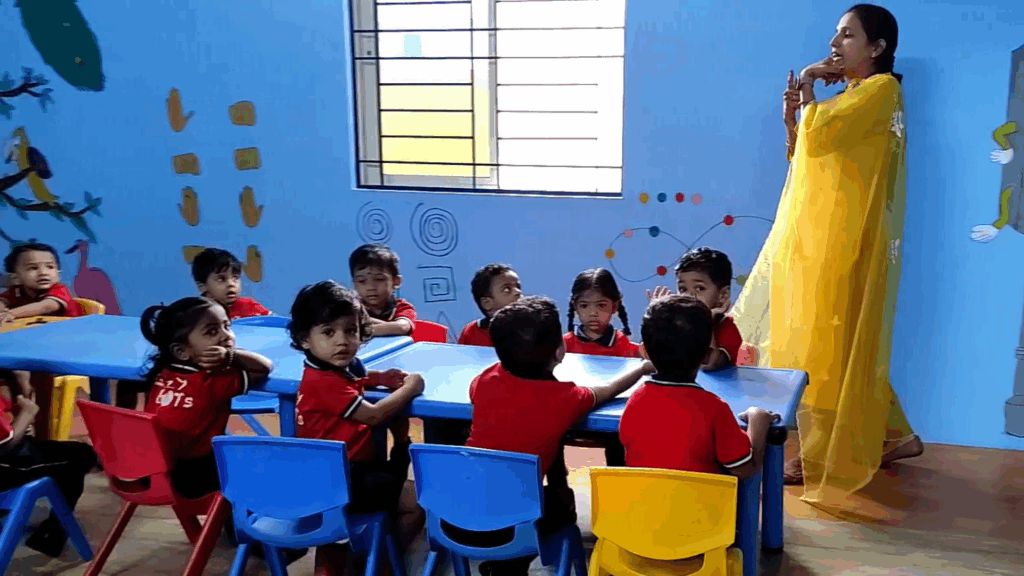
At Krazy Tots International Preschool in Horamavu, Bengaluru, we understand that every child is unique. Our experienced teachers help children adjust comfortably and build confidence through fun, play-based learning.
Quick Answer
A child is generally ready for preschool if they can stay away from parents for short periods, communicate basic needs, follow simple instructions, interact with other children, and show curiosity about learning. Emotional readiness is often more important than academic skills.
Preschool Readiness Checklist
| Sign | Why It Matters |
|---|---|
| Comfortable away from parents | Builds confidence |
| Can follow simple instructions | Supports classroom learning |
| Shows curiosity | Encourages exploration |
| Plays with other children | Develops social skills |
| Communicates basic needs | Helps teachers understand them |
| Shows interest in books and stories | Supports language development |
| Can manage simple routines | Encourages independence |
1. Your Child Can Stay Away From You for a Short Time
Many children experience separation anxiety at first, and that’s completely normal.
However, if your child can comfortably stay with grandparents, relatives, or trusted caregivers for a short period, they are more likely to adjust well to preschool.
Remember, even children who cry during the first week usually settle in with time.
2. Your Child Can Follow Simple Instructions
Preschool teachers often give simple directions like:
- Sit in a circle.
- Put away your toys.
- Wash your hands.
- Line up with your friends.
If your child understands and follows basic instructions, they are ready to participate in classroom activities.
3. Your Child Is Curious About the World
Curiosity is one of the biggest signs of preschool readiness.
Does your child ask questions like:
- Why is the sky blue?
- What’s that?
- How does this work?
Children who enjoy exploring naturally enjoy preschool because every day offers something new to discover.
4. Your Child Enjoys Playing With Other Children
Preschool is where children begin building friendships.
Signs include:
- Sharing toys
- Taking turns
- Playing simple games
- Showing interest in other children
Even shy children can enjoy preschool with gentle encouragement from caring teachers.
5. Your Child Can Communicate Basic Needs
Your child doesn’t need perfect speech.
They should simply be able to communicate basic needs such as:
- I’m hungry.
- I need water.
- I need the bathroom.
- I’m feeling sad.
This helps teachers respond quickly and appropriately.
6. Your Child Shows Interest in Stories and Books
Children who enjoy:
- Looking at picture books
- Listening to bedtime stories
- Singing rhymes
often transition smoothly into preschool learning.
Storytelling develops imagination, vocabulary, and listening skills.
7. Your Child Can Sit for a Few Minutes
Preschool does not require children to sit still for long periods.
However, children should be able to participate in short activities such as:
- Story time
- Circle time
- Art and craft
- Songs
Even sitting for 5–10 minutes is a positive sign.
8. Your Child Is Beginning to Be Independent
Independence grows naturally during preschool.
Before joining, children may already be able to:
- Carry their school bag
- Wash their hands
- Eat with minimal help
- Put away toys
These small skills help children feel more confident.
9. Your Child Enjoys Exploring New Places
Children who enjoy visiting parks, playgrounds, or new environments often adjust well to preschool.
Exploration builds confidence and curiosity.
10. Your Child Shows Interest in Learning
Your child doesn’t need to know letters or numbers.
Instead, notice whether they enjoy:
- Drawing
- Coloring
- Building blocks
- Matching shapes
- Singing rhymes
A willingness to learn is much more important than academic knowledge.
11. Your Child Is Learning to Express Emotions
Preschool helps children understand emotions.
If your child can begin expressing feelings like:
- Happy
- Sad
- Angry
- Excited
they are developing important emotional skills.
Teachers continue building these skills throughout preschool.
12. Your Child Can Follow a Simple Routine
Preschool follows a daily schedule.
Children who are familiar with routines such as:
- Wake-up time
- Meal time
- Play time
- Bedtime
often adjust more easily.
Consistency creates a sense of security.
13. Your Child Enjoys Creative Activities
Creative play encourages learning.
Children ready for preschool often enjoy:
- Painting
- Coloring
- Dancing
- Singing
- Pretend play
Creativity supports problem-solving and confidence.
14. Your Child Is Becoming More Confident
Confidence develops gradually.
Small signs include:
- Trying new activities
- Speaking to familiar adults
- Exploring independently
- Solving simple problems
Preschool helps strengthen this confidence even further.
15. Your Child Is Excited About Going to School
One of the strongest signs is simple excitement.
If your child talks positively about:
- School
- New friends
- Teachers
- Learning
they are likely ready for this exciting new chapter.
What If My Child Doesn’t Show All 15 Signs?
Don’t worry.
No child is perfectly “ready.”
Every child develops differently.
Preschool is designed to help children:
- Build confidence
- Improve communication
- Learn routines
- Make friends
- Become more independent
Teachers understand that adjustment takes time.
How Parents Can Prepare Their Child for Preschool
Before the first day, parents can:
Visit the Preschool Together
A familiar environment reduces anxiety.
Encourage Independence
Practice simple tasks like carrying a bag or washing hands.
Read Books About Preschool
Stories help children understand what to expect.
Follow a Consistent Routine
Regular sleep and meal schedules make the transition easier.
Talk Positively About School
Your excitement helps your child feel confident.
Why Preschool Readiness Is About More Than Academics
Many parents worry that their child should already know:
- ABCs
- Numbers
- Writing
These skills are helpful but not essential.
The most important qualities are:
- Curiosity
- Confidence
- Communication
- Emotional readiness
- Social interaction
A quality preschool teaches academic skills naturally through play and exploration.
Why Families Choose Krazy Tots International Preschool in Horamavu
At Krazy Tots International Preschool, we believe every child deserves a happy and confident start to learning.
We offer:
- Play-based learning
- Experienced and caring teachers
- Safe and secure campus
- Spacious classrooms
- Large open play area with a covered roof
- Nursery, LKG, UKG, and daycare programs
- Affordable fee structure
- Individual attention for every child
Our nurturing environment helps children adjust comfortably while building confidence, independence, and a lifelong love for learning.
Is Your Child Ready for Preschool FAQs
What is the best age to start preschool?
Most children start preschool between 2.5 and 3 years, but readiness depends on their emotional and social development.
Does my child need to be potty trained before preschool?
Every preschool has different policies. Many schools encourage toilet training, while others provide support during the transition.
What if my child cries on the first day?
This is completely normal. Most children adjust within a few weeks as they become familiar with their teachers and classmates.
Does my child need to know ABCs before joining preschool?
No. Preschool is designed to teach early literacy through fun, play-based activities. Curiosity and willingness to learn are more important than academic knowledge.
How can I prepare my child for preschool?
Final Thoughts
Visit the preschool, establish routines, encourage independence, read books about school, and talk positively about the preschool experience.
Every child is unique, and there is no perfect checklist that determines preschool readiness. While the signs above can help parents feel more confident, the most important factor is choosing a preschool that understands and supports each child’s individual development.
Visit Krazy Tots International Preschool today and explore our spacious campus, experienced teachers, large covered play area, and play-based learning programs designed to help every child grow, learn, and succeed.
With caring teachers, a safe environment, and engaging activities, children quickly gain the confidence they need to thrive.
At Krazy Tots International Preschool in Horamavu, Bengaluru, we help every child take their first steps into learning with joy, curiosity, and confidence.