01
Talk to Your Child Face-to-Face
Children often find it easier to understand when they can see the person speaking. Get down to your child’s eye level, use a calm voice, and say what you need clearly.
02
Read Stories Together
Storytime is a wonderful way to practise listening. Choose short, age-appropriate stories with colourful pictures and interesting characters.
03
Give Simple Instructions
Everyday routines provide many opportunities to practise listening. Begin with one clear instruction, such as “Bring your water bottle.”
04
Encourage Your Child to Take Turns Speaking
Good listening develops through conversation. During family discussions, allow your child to speak without interruption and then gently encourage them to listen when someone else is talking.
05
Play Listening Games
Games make listening enjoyable without making it feel like a lesson. Activities such as Simon Says, identifying animal sounds, following a rhythm, or guessing familiar sounds encourage children to pay attention.
06
Reduce Distractions During Conversations
Background television, loud music, and multiple conversations can make listening more difficult. When you want to read a story or explain something important, choose a quieter space and pause distracting activities.
HOW PRESCHOOL SUPPORTS LISTENING DEVELOPMENT
Learning to Listen Through Stories, Play, and Group Activities
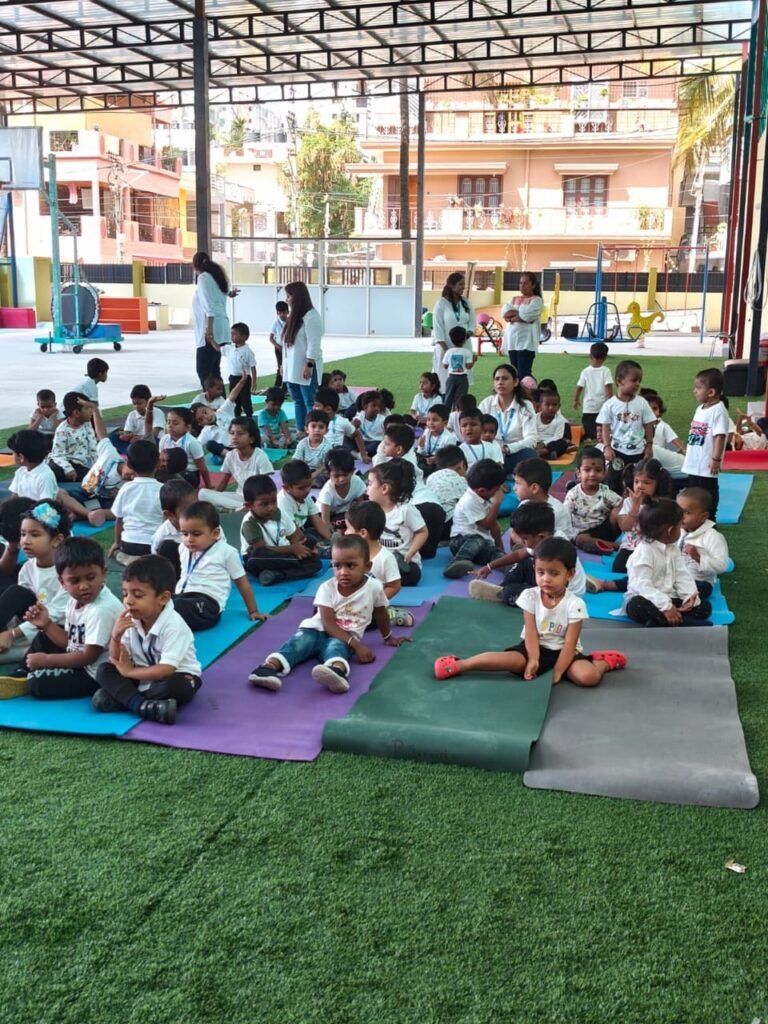
Preschool gives children opportunities to listen to adults and other children in a variety of situations. Circle time, storytelling, music, classroom routines, and collaborative play help children practise understanding spoken language.
At Krazy Tots International Preschool in Horamavu, Bangalore, early learning experiences can encourage children to listen, participate, ask questions, and communicate with others. Age-appropriate activities such as stories, rhymes, conversations, and guided play provide meaningful opportunities to practise these skills.
Group activities also help children understand that listening is part of working together. They learn to wait for instructions, notice what classmates say, and respond during shared experiences.
Every child develops at a different pace. A supportive learning environment gives children time to practise and build confidence without unnecessary pressure.
COMMON MISTAKES TO AVOID WHEN DEVELOPING LISTENING SKILLS
Parents can make listening practice more effective by avoiding a few common habits.
Giving too many instructions at once: Long explanations may be difficult for young children to remember. Break tasks into small steps.
Expecting children to sit still for too long: Preschoolers learn through movement and active play. Listening activities can include clapping, dancing, and simple actions.
Mistaking distraction for disobedience: Children may not always understand, remember, or process instructions immediately. Check whether your message was clear and appropriate for their age.
Interrupting children frequently: Give your child time to finish speaking. This shows that listening is important for everyone.
Using television as the main learning activity: Videos may provide useful stories or songs, but they should not replace conversations, shared reading, and interactive play.
Correcting every mistake: Focus on helping your child understand and try again rather than making every activity a test.
Professional Early Childhood Learning
At Krazy Tots International Preschool, early learning includes opportunities for children to explore, create and practise important developmental skills through age-appropriate activities.
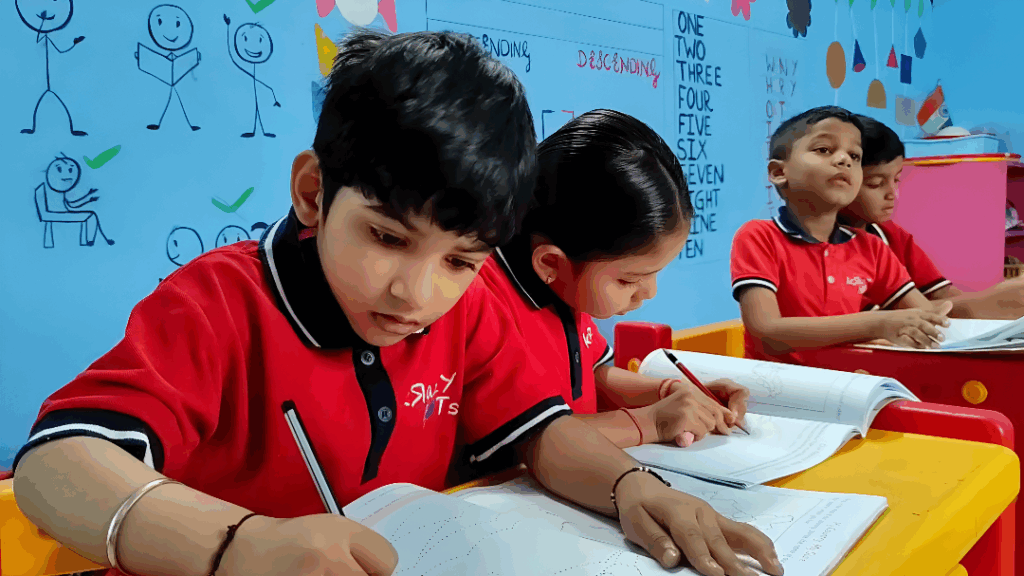
From Nursery to LKG and UKG, children gradually build skills related to drawing, pencil control, early literacy, communication and classroom independence.
Fine motor activities can be adapted to suit children’s individual abilities and developmental stages. Children should have time to practise without unnecessary pressure to write neatly before they are ready.
A balanced preschool experience combines hands-on play, creative expression, movement and early academic learning to support overall development.