Best Screen-Free Activities for Kids
Fun Ideas for Healthy Growth
In today’s world, children spend a lot of time on screens like mobile phones, TVs, and tablets. While screens can be useful, too much screen time can affect a child’s focus, sleep, and social skills.
The best screen-free activities for kids include storytelling, arts and crafts, outdoor play, puzzles, music, and pretend play. These activities help children improve creativity, concentration, communication, and physical health while reducing screen dependency.
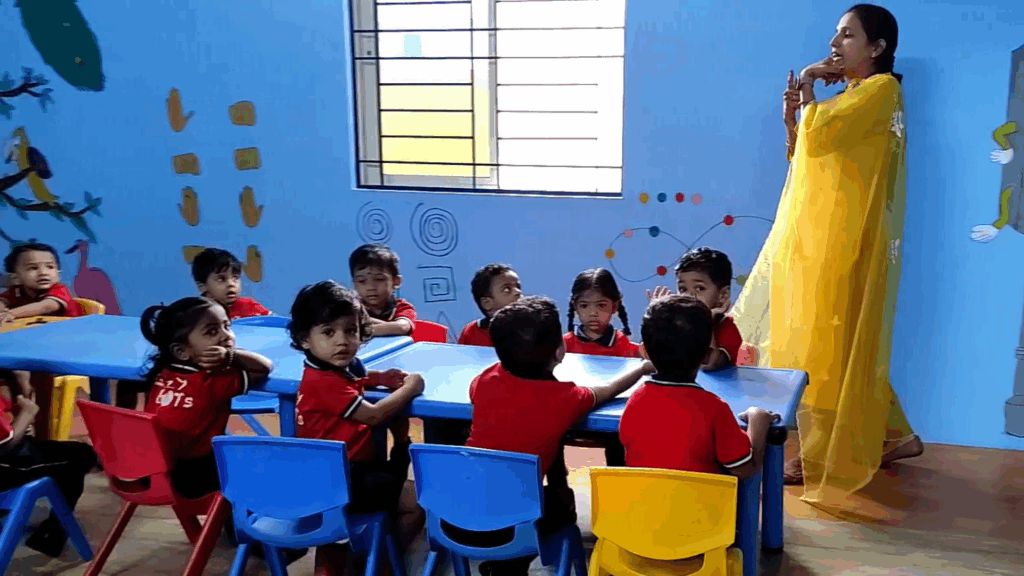
At Krazy Tots International Preschool in Horamavu, Bengaluru, we focus on hands-on, play-based learning where children explore, imagine, and grow without depending on screens.
Why Screen-Free Activities Are Important for Kids
Screen-free activities are not just about avoiding screens — they help children grow in the right way.
These activities help children:
- Improve creativity and imagination
- Build communication skills
- Develop emotional understanding
- Stay physically active
- Improve focus and attention
Experts say reducing screen time helps children sleep better, stay active, and develop stronger social skills.
Quick Screen-Free Activities Table
| Activity | Skills Developed |
|---|---|
| Storytelling | Language & imagination |
| Arts & Crafts | Creativity & motor skills |
| Outdoor Play | Physical fitness |
| Puzzles | Problem-solving |
| Music & Dance | Coordination & expression |
| Role Play | Social skills |
| Gardening | Responsibility |
10 Best Screen-Free Activities for Kids
Let’s explore simple and fun activities that children love.
1. Storytelling and Puppet Play
Storytelling is one of the best ways to develop a child’s imagination.
How to Do It
Use storybooks or create your own stories. You can also use puppets made from socks or paper.
Benefits
- Improves language skills
- Builds imagination
- Helps emotional expression
Storytelling helps children understand emotions and develop communication skills.
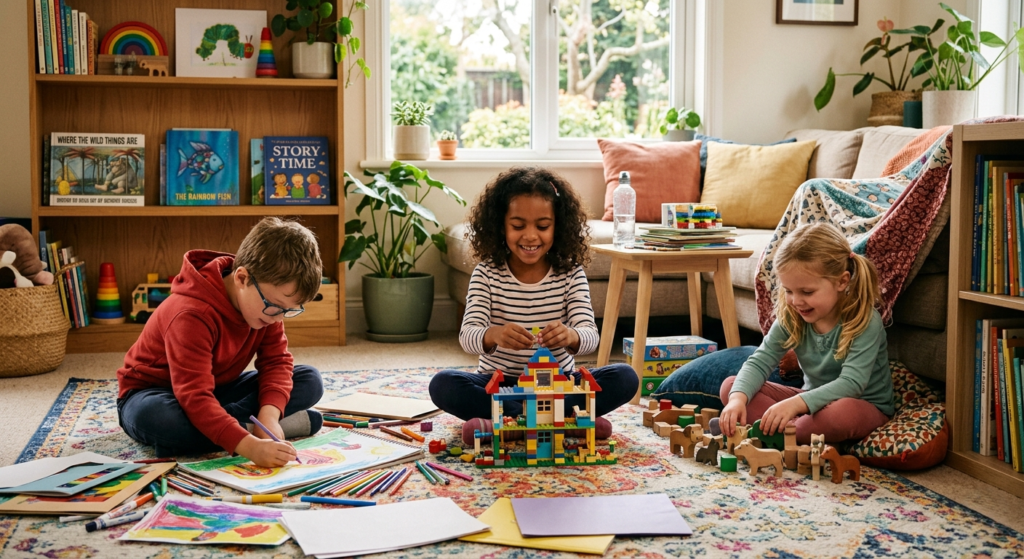
2. Arts and Crafts
Children love creating things with their hands.
How to Do It
Give them paper, colors, glue, and simple craft materials.
Benefits
- Improves fine motor skills
- Boosts creativity
- Helps focus
Craft activities allow children to explore colors and shapes while learning.
3. Outdoor Nature Walks
Nature is the best classroom for children.
How to Do It
Take children to a park or garden and let them observe plants, birds, and insects.
Benefits
- Improves observation skills
- Encourages curiosity
- Keeps children active
Outdoor activities help children connect with the environment and stay healthy.
4. Building with Blocks or LEGO
Building games are fun and educational.
How to Do It
Give children blocks or building toys and let them create anything they like.
Benefits
- Improves problem-solving
- Develops creativity
- Builds patience
Open-ended play helps children think and explore freely.
5. Music and Dance
Music makes learning fun and active.
How to Do It
Play songs and let children dance or use simple instruments.
Benefits
- Improves coordination
- Boosts confidence
- Encourages self-expression
Music helps children express emotions and enjoy movement.
6. Role Play and Pretend Play
Children love acting like adults.
How to Do It
Let them pretend to be a doctor, teacher, or chef using simple props.
Benefits
- Builds social skills
- Improves communication
- Encourages imagination
Pretend play helps children understand the real world.
7. Simple Science Experiments
Kids enjoy activities that surprise them.
How to Do It
Try easy experiments like mixing baking soda and vinegar.
Benefits
- Builds curiosity
- Improves logical thinking
- Makes learning fun
Hands-on learning helps children understand concepts better.
8. Cooking with Kids
Cooking is both fun and educational.
How to Do It
Let children help in simple tasks like mixing or washing vegetables.
Benefits
- Teaches responsibility
- Improves motor skills
- Builds independence
Cooking also helps children learn about food and nutrition.
9. Gardening
Gardening teaches patience and care.
How to Do It
Plant seeds in pots and let children water them daily.
Benefits
- Builds responsibility
- Improves focus
- Teaches about nature
Children love watching plants grow over time.
10. Board Games and Puzzles
Games are a great way to learn while having fun.
How to Do It
Use simple board games or puzzles suitable for your child’s age.
Benefits
- Improves memory
- Builds problem-solving skills
- Teaches patience
Board games also encourage family bonding.
How Screen-Free Activities Help Child Development
Screen-free activities support overall development in children.
Physical Development
Outdoor play and movement improve strength and coordination.
Mental Development
Puzzles and games improve thinking and memory.
Emotional Development
Creative activities help children express feelings.
Social Development
Group activities improve communication and teamwork.
These activities help children grow into confident and independent learners.
How Krazy Tots International Preschool Encourages Screen-Free Learning
At Krazy Tots International Preschool in Horamavu, we believe children learn best through real experiences, not screens.
Our daily activities include:
- Storytelling sessions
- Creative arts and crafts
- Outdoor play and exploration
- Music and dance
- Group learning activities
Our goal is to help children:
- Think creatively
- Speak confidently
- Learn independently
- Enjoy learning
We provide a safe, open, and engaging environment where children grow happily.
Tips for Parents to Reduce Screen Time
Here are simple ways to reduce screen time at home:
- Set fixed screen time limits
- Create screen-free zones (like dining area)
- Encourage outdoor play
- Spend time doing activities together
- Be a role model
Creating a routine helps children balance screen time and real-life activities.
FAQs
What are the best screen-free activities for kids?
Activities like storytelling, crafts, puzzles, outdoor play, and music are some of the best screen-free options.
Why are screen-free activities important?
They help improve creativity, focus, communication, and physical health while reducing screen dependency.
How can I reduce my child’s screen time?
You can set limits, encourage play-based activities, and spend more time engaging with your child.
Are screen-free activities better than screen time?
Yes. Screen-free activities help children develop real-life skills like communication, creativity, and problem-solving.
How do preschools support screen-free learning?
Preschools use play-based learning, storytelling, and interactive activities to teach children without screens.
Final Thoughts
Screen-free activities are not just alternatives to screens — they are essential for a child’s healthy development.
From storytelling and crafts to outdoor play and puzzles, these activities help children learn, grow, and enjoy their childhood fully.
At Krazy Tots International Preschool in Horamavu, Bengaluru, we focus on creating a fun, engaging, and screen-free learning environment where children can explore, imagine, and build strong foundations for the future.