01
Name the Feeling
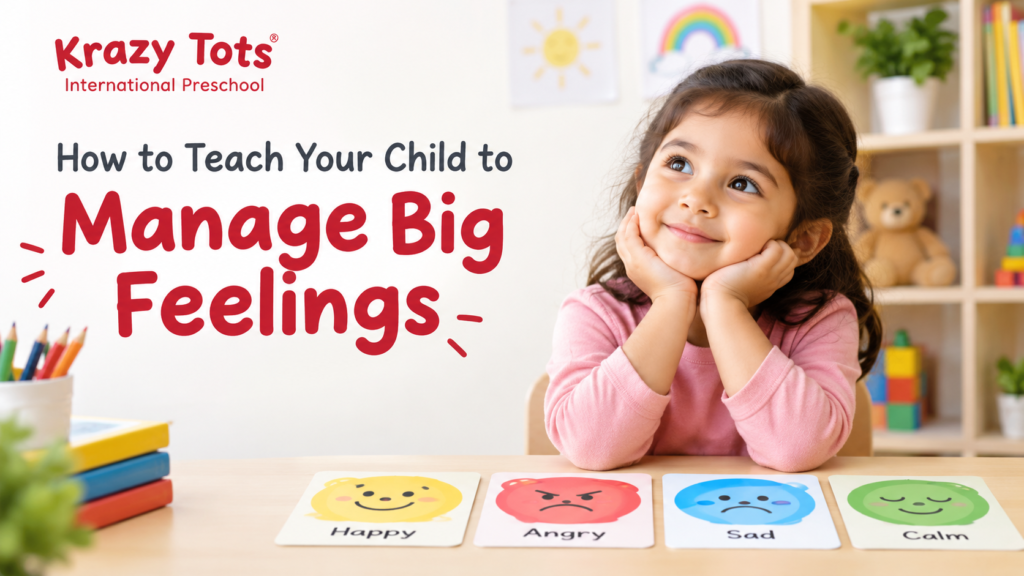
Help your child put emotions into simple words such as happy, sad, angry, worried, excited or frustrated.
02
Listen Calmly
Give your child time to express what they are feeling without immediately telling them to stop crying or becoming upset.
03
Teach Simple Ways to Calm Down
Encourage deep breathing, quiet time, talking to a trusted adult, drawing, hugging a favourite toy or taking a short break.
04
Accept Feelings, Guide Behaviour
Let children know that it is okay to feel angry or frustrated, but it is not okay to hurt themselves or someone else.
05
Be a Positive Example
Children learn by watching adults. Showing calm ways of handling frustration can help children understand healthy emotional responses.
06
Give Them Time to Practise
Emotional regulation is a skill that develops gradually. Children need repeated opportunities to recognise feelings and practise appropriate responses.
Helping Children Understand Different Emotions
Children experience many different emotions during the day. Helping them recognise each feeling can make it easier to communicate and respond appropriately.
Happy
Talk about the things that make your child feel joyful, proud or excited.
Sad
Let your child know that sadness is normal and that asking for comfort is okay.
Angry
Help your child understand that anger is a normal feeling while teaching safe ways to express it.
Worried
Listen to your child’s concerns and offer reassurance without dismissing their feelings.
Frustrated
Remind your child that difficult things can take time and that asking for help is okay.
Excited
Help children understand that excitement is positive, but they may still need to slow down, listen and follow instructions.
Supporting Emotional Growth at Krazy Tots
At Krazy Tots International Preschool, early learning focuses on more than letters and numbers.
Children are encouraged to communicate, participate, explore and interact with others in a supportive environment.
Teachers can help children develop important social-emotional skills by encouraging them to:
- Express their thoughts and feelings
- Talk with teachers and classmates
- Share and take turns
- Participate in group activities
- Build friendships
- Solve simple social problems
- Become more independent
A positive classroom environment can help children feel comfortable while developing confidence and communication skills.
How Parents Can Support Emotional Development
Parents play an important role in helping children understand their feelings.
You can support your child by:
Listening before giving advice
Give your child time to explain what happened.
Using simple emotion words
Help your child learn words such as happy, sad, angry, worried and frustrated.
Avoiding shame
Let your child know that having difficult feelings is normal.
Setting clear boundaries
Children need to understand that while feelings are acceptable, hurtful behaviour is not.
Being a role model
Show your child healthy ways of handling stress and frustration.
Praising positive behaviour
Notice when your child uses words, asks for help or calms down appropriately.
Professional Early Childhood Learning
At Krazy Tots International Preschool, children learn through a combination of age-appropriate activities, play, exploration and social interaction.
Our learning environment encourages children to communicate, participate and develop confidence while building important early-life skills.
From Nursery to LKG and UKG, children are given opportunities to develop academically, socially, emotionally, physically and creatively.
A supportive preschool environment can help children take their first steps towards becoming confident and independent learners.