01
Builds Language and Communication Skills
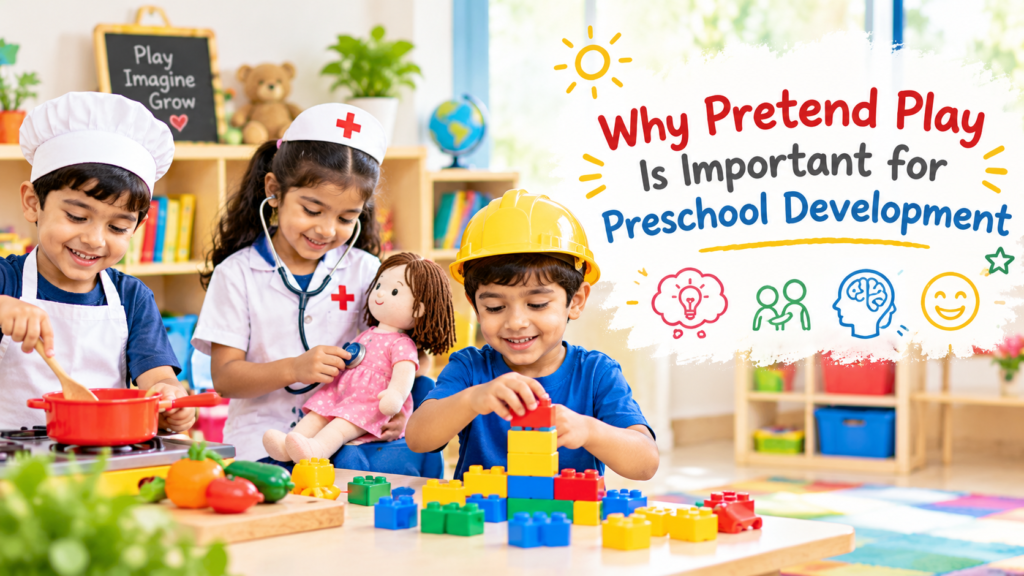
Pretend play encourages children to use words to explain what they are doing, ask questions, and interact with others. While playing shopkeeper, a child might say, “What would you like to buy?” or “Here is your bag.”
02
Develops Imagination and Creativity
Children can turn ordinary objects into something entirely different during imaginative play. A blanket may become a tent, a cardboard box may become a rocket, and a row of cushions may become a mountain.
03
Encourages Social Skills and Cooperation
When children pretend to run a restaurant or care for toy animals together, they need to share ideas, choose roles, and take turns. They may need to agree on what happens next or find a way to continue the game when their ideas differ.
04
Strengthens Problem-Solving Skills
Imaginative games often involve small challenges. A pretend shop may run out of food, a toy car may need a bridge, or a pretend picnic may need a place to sit. Children can experiment with ideas, make choices, and find solutions.
05
Supports Emotional Understanding
Pretend play gives children a way to explore feelings and familiar experiences. A child might pretend that a teddy bear is nervous about visiting a doctor or that a doll is sad because it lost a toy.
06
Builds Independence and Confidence
During pretend play, children can make decisions about their stories, choose what happens next, and experiment with different roles. They may practise activities they have observed adults doing, such as preparing a meal or organising a bag.
HOW PARENTS CAN MAKE PRETEND PLAY MORE MEANINGFUL
Encourage Play Without Turning It into a Lesson
Children benefit when imaginative play feels relaxed and enjoyable. You can support their learning without asking questions every minute or expecting them to demonstrate a particular skill.
Provide simple materials. Keep items such as paper, crayons, building blocks, toy animals, safe containers, and dress-up clothes available when possible.
Give children enough time. Some children need time to decide what they want to play. Avoid interrupting too quickly when they are creating a story.
Join when invited. Become the customer, passenger, patient, or guest if your child wants you to participate. Follow their ideas and let them direct the game sometimes.
Allow play to change. A pretend restaurant might suddenly become a spaceship. This flexibility is part of imaginative play.
Encourage interaction with others. When children play together, they can practise sharing roles, listening to ideas, and finding ways to keep the game going.
Keep materials safe. Choose age-appropriate objects, avoid sharp or breakable items, and supervise activities involving small parts or household equipment.
There is no need to insist that every play session teaches a specific academic skill. Imagination, enjoyment, and exploration are valuable in themselves.
COMMON MISTAKES TO AVOID DURING PRETEND PLAY
Parents can support imaginative development by avoiding a few common habits.
Avoid controlling every part of the game. Children need opportunities to create their own stories and make decisions.
Do not focus only on educational toys. Everyday objects and simple materials can inspire just as much creativity.
Avoid correcting imaginary ideas. Pretend play is not meant to follow the rules of real life. Let children explore possibilities safely.
Do not force children to participate in group play. Some children prefer to begin by playing alone or watching others before joining in.
Avoid expecting every child to play the same way. Children have different interests, temperaments, and ways of expressing imagination.
Do not overlook language during play. If your child invites you into a game, take the opportunity to talk, listen, and share ideas naturally.
HOW PRESCHOOL SUPPORTS PRETEND PLAY AND DEVELOPMENT
Learning Through Imagination, Interaction, and Exploration
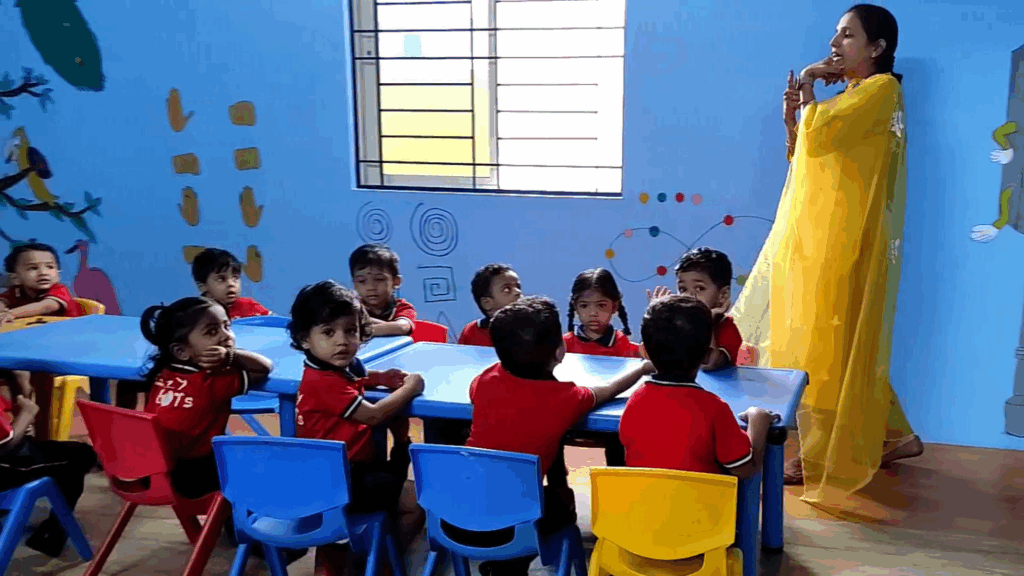
Preschool provides opportunities for children to explore roles, interact with classmates, use language, and experiment with different ideas. Pretend play can be included in everyday learning through role-play corners, storytelling, building activities, and guided group games.
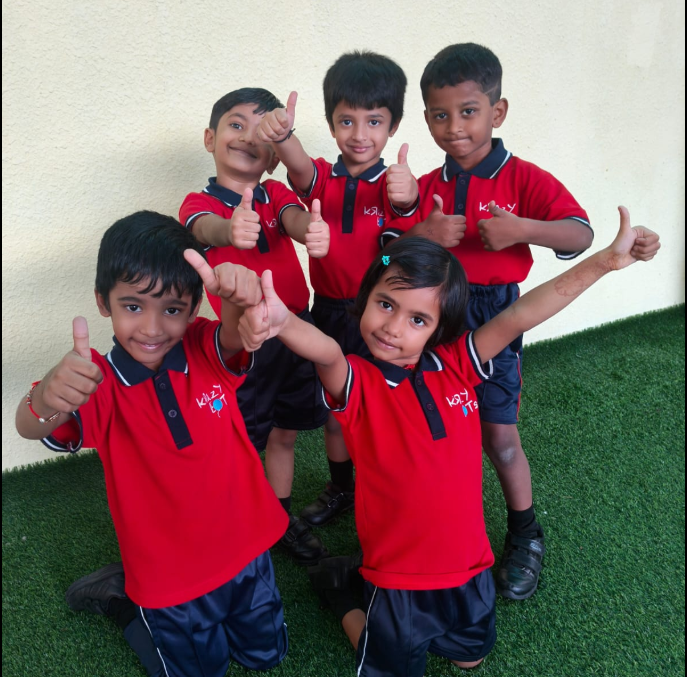
At Krazy Tots International Preschool in Horamavu, Bangalore, age-appropriate play experiences can give children opportunities to communicate, express ideas, explore their surroundings, and learn alongside other children.
For example, a pretend shop can encourage children to use new words and practise counting. A storytelling activity can help them imagine characters and events. Group role-play can create opportunities to share materials, listen to others, and cooperate.
These experiences complement other forms of early learning. Children also need opportunities for movement, creative activities, conversations, outdoor exploration, and rest.
The aim is to give children a supportive environment where curiosity and imagination can grow naturally.