01
Hand and Finger Strength
Squeezing playdough, building with blocks and tearing paper help children strengthen the small muscles used during writing.
02
Hand-Eye Coordination
Drawing, completing puzzles and placing objects in containers help children coordinate their hand movements with what they see.
03
Pencil and Crayon Control
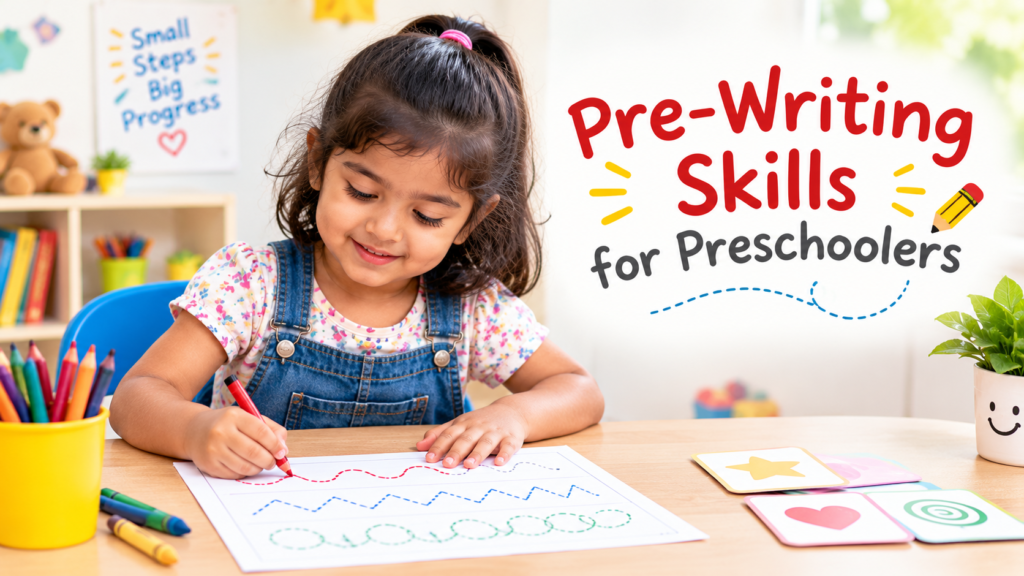
Scribbling with chunky crayons, drawing freely and making marks on different surfaces allow children to explore writing tools.
04
Recognising Lines and Shapes
Playing with straight lines, circles, curves and simple patterns helps children become familiar with shapes used in letters and numbers.
05
Visual Tracking
Following a moving toy, looking at picture books and tracing simple paths with a finger encourage children to follow visual information.
06
Sitting and Working Comfortably
A suitable table, comfortable seating and short activities help children practise working with their hands while maintaining a relaxed posture.
How Preschool Supports Pre-Writing Skills
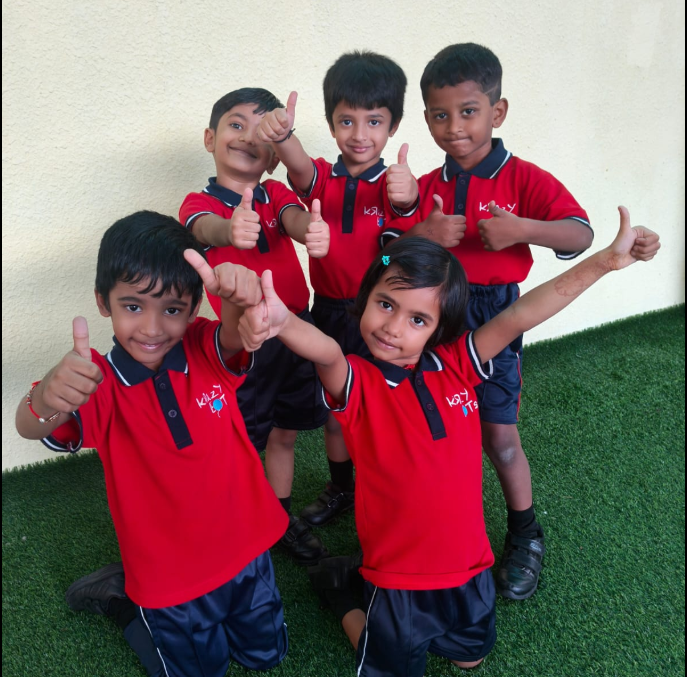
At Krazy Tots International Preschool, early learning includes opportunities for children to explore, create and practise developmental skills through age-appropriate experiences.
From Nursery to LKG and UKG, children can gradually build skills related to drawing, hand control, early literacy, communication and classroom independence.
Creative activities, hands-on exploration and guided practice give children opportunities to become more familiar with lines, shapes, patterns and writing tools. Activities can be adapted to suit children’s individual abilities and developmental stages.
A balanced preschool experience also recognises that children need time for movement, imaginative play, social interaction and rest alongside early academic learning.
The aim is to help children develop confidence and readiness for new learning experiences without unnecessary pressure to write neatly before they are ready.
How Parents Can Support Pre-Writing Development at Home
You do not need to set aside a long period every day for pre-writing practice. Small, enjoyable opportunities during normal routines can make a difference.
Keep practice short and playful
Offer a few minutes of drawing, playdough or puzzles when your child is interested. Stop if they become tired or frustrated.
Choose suitable materials
Use large sheets of paper, chunky crayons and age-appropriate toys. Materials should be comfortable to handle and suitable for your child’s developmental stage.
Avoid forcing a particular pencil grip
Children’s grips develop over time. Encourage a relaxed, comfortable hold rather than repeatedly correcting their fingers.
Focus on effort instead of neatness
Praise your child for trying new movements, exploring shapes and expressing ideas. Perfect lines and circles are not necessary.
Let children use both hands
Children may use one hand to draw and the other to hold the paper. Give them opportunities to coordinate both hands without forcing a preferred writing hand.
Reduce worksheet pressure
Worksheets can be introduced when appropriate, but they should not replace drawing, movement, sensory play and hands-on exploration.
Supervise activities
Choose non-toxic, age-appropriate materials and supervise children closely around small objects, scissors and other potential hazards.