When Should You Change Your Child’s Preschool
Choosing the right preschool is one of the most important decisions parents make during their child’s early years. A good preschool provides a safe environment, caring teachers, engaging learning experiences, and opportunities for children to grow socially, emotionally, and academically.
However, sometimes parents begin to wonder whether their child’s current preschool is still the right fit. This raises an important question:
When should you change your child’s preschool?
In most cases, children benefit from consistency and routine. Small challenges during the adjustment period are normal and do not necessarily mean a preschool change is needed. However, if there are ongoing concerns about safety, child happiness, teacher quality, communication, or overall development, it may be time to consider other options.
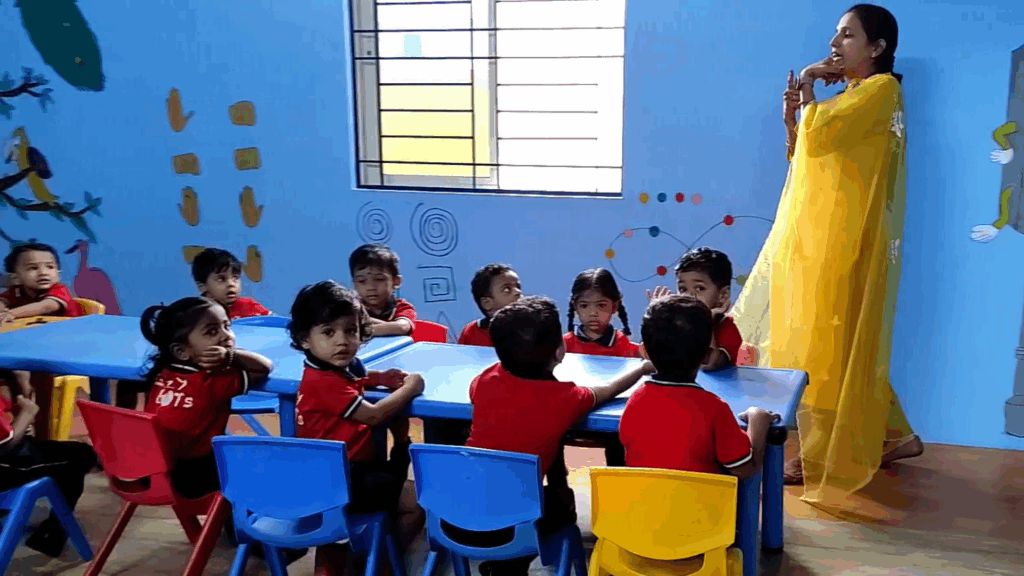
At Krazy Tots International Preschool in Horamavu, Bengaluru, we believe parents should feel confident and comfortable with their child’s learning environment. Understanding the signs can help families make the best decision for their child’s future.
- Quick Answer
- Signs It May Be Time to Change Your Child's Preschool
- When You Should NOT Change Preschools
- Questions to Ask Before Changing Preschools
- How to Transition Your Child to a New Preschool
- What to Look for in a New Preschool
- Why Many Families Choose Krazy Tots International Preschool in Horamavu
- When Should You Change Your Child's Preschool FAQs
- Final Thoughts of When Should You Change Your Child's Preschool
Quick Answer
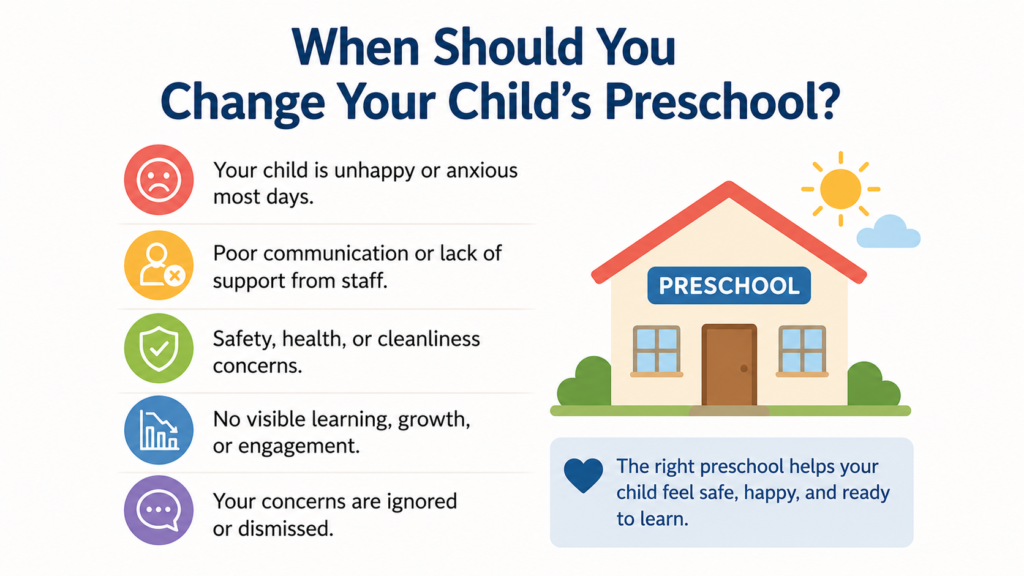
You should consider changing your child’s preschool if there are consistent concerns about safety, poor teacher support, lack of communication, your child’s emotional well-being, or if the preschool no longer meets your child’s developmental needs. Before making a decision, it is important to discuss concerns with the school and evaluate whether improvements can be made.
Signs It May Be Time to Change Your Child’s Preschool
Not every difficult day means a preschool change is necessary. However, repeated problems over time should not be ignored.
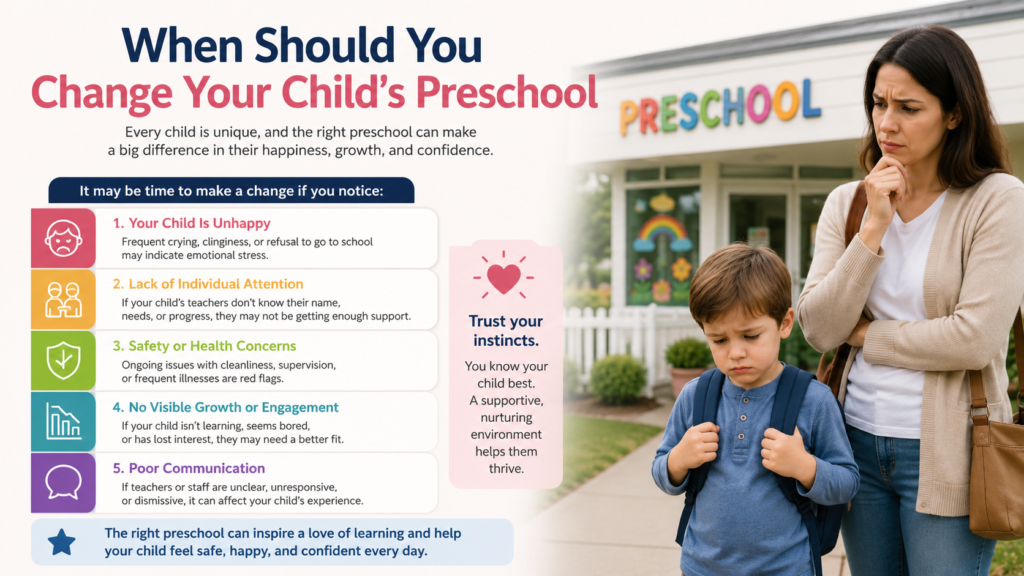
1. Your Child Is Consistently Unhappy
Most children experience some separation anxiety when they first start preschool. This is completely normal.
However, if your child:
- Cries every day for months
- Shows extreme resistance to attending school
- Appears anxious constantly
- Never talks positively about school
It may be worth investigating the cause.
Children should gradually become comfortable and develop positive relationships within the preschool environment.
2. Safety Concerns Are Not Addressed
Safety should always be a parent’s top priority.
You should never ignore concerns related to:
- Poor supervision
- Unsafe play areas
- Lack of security measures
- Frequent accidents
- Unclear emergency procedures
A quality preschool should provide a safe and secure environment where parents feel confident leaving their children.
3. Poor Communication from the Preschool
Parents and teachers should work together to support a child’s development.
Warning signs include:
- Lack of updates
- Difficulty reaching staff
- Unanswered concerns
- Limited parent involvement
Good communication helps build trust and ensures everyone is working toward the same goal.
4. Your Child Is Not Progressing
Every child develops at their own pace, but preschool should encourage growth in several areas.
You may want to evaluate the preschool if your child shows little progress in:
- Communication skills
- Social interaction
- Confidence
- Independence
- Learning engagement
The goal is not academic pressure but healthy overall development.
5. Frequent Teacher Turnover
Young children thrive on stability and familiar relationships.
If teachers are constantly changing, children may struggle to:
- Build trust
- Feel secure
- Adjust to routines
Consistent and experienced teachers play an important role in early childhood education.
6. The Preschool Environment Feels Negative
A preschool should feel welcoming, positive, and child-friendly.
Pay attention to:
- Teacher behavior
- Classroom atmosphere
- Child engagement
- Emotional support
Children learn best when they feel encouraged and respected.
7. Your Child’s Needs Have Changed
As children grow, their learning needs also change.
Sometimes parents initially choose a preschool that works well for younger children but later realize their child needs:
- More challenging activities
- Better social opportunities
- Stronger school readiness programs
- Additional support services
A preschool should continue meeting your child’s developmental needs as they progress.
8. The Preschool Focuses Only on Academics
Some preschools place too much emphasis on worksheets and structured academics.
Young children learn best through:
- Play
- Exploration
- Creativity
- Hands-on experiences
- Social interaction
If a preschool creates excessive academic pressure, children may lose interest in learning.
9. Your Child Frequently Complains About School
Occasional complaints are normal.
However, repeated concerns such as:
- Feeling scared
- Being ignored
- Not enjoying activities
- Disliking interactions
should be taken seriously.
Listen carefully and try to understand what your child is communicating.
10. You No Longer Feel Confident About the Preschool
Parents know their children better than anyone.
If you consistently feel uncomfortable about:
- School policies
- Staff behavior
- Learning quality
- Overall environment
It may be time to reassess your options.
Trusting your instincts is important when making decisions about your child’s education.
When Should You Change Your Child’s Preschool.
When You Should NOT Change Preschools
Not every challenge requires changing schools.
Many issues improve naturally over time.
Temporary Separation Anxiety
It is normal for children to:
- Cry during drop-off
- Miss parents
- Feel nervous
Most children adjust within a few weeks.
Minor Friendship Issues
Children are still learning social skills.
Small disagreements and friendship challenges are common parts of preschool development.
Initial Adjustment Difficulties
New routines take time.
Children may need several weeks to become fully comfortable in a new environment.
Patience often solves many early concerns.
Questions to Ask Before Changing Preschools
Before making a decision, ask yourself:
- Have I discussed my concerns with the teachers?
- Has the preschool attempted to address the issue?
- Is the problem temporary or ongoing?
- How will a change affect my child emotionally?
- What improvements am I looking for in a new preschool?
Sometimes open communication can resolve concerns without requiring a school change.
How to Transition Your Child to a New Preschool
If changing preschools becomes necessary, a smooth transition can help your child adjust.
Talk Positively About the Change
Explain the move in simple and reassuring language.
Focus on:
- New opportunities
- New friends
- Fun activities
Avoid creating fear or anxiety.
Visit the New Preschool
Allow your child to:
- Explore classrooms
- Meet teachers
- See play areas
Familiarity helps children feel more comfortable.
Maintain Consistent Routines
Keeping regular meal, sleep, and drop-off routines can reduce stress during transitions.
Give Your Child Time
Adjustment takes time.
Offer encouragement and be patient during the transition process.
What to Look for in a New Preschool
If you decide to make a change, prioritize:
Safe Environment
Children should feel secure and protected.
Caring Teachers
Teachers should be warm, experienced, and supportive.
Play-Based Learning
Learning should be engaging and age-appropriate.
Strong Communication
Parents should receive regular updates and support.
Child Happiness
Children should feel comfortable, confident, and excited to learn.
Why Many Families Choose Krazy Tots International Preschool in Horamavu
At Krazy Tots International Preschool, we understand how important trust is for parents.
Our preschool provides:
- Experienced and caring teachers
- Safe and secure campus
- Play-based learning approach
- Large open play area
- Covered outdoor activity spaces
- Nursery, LKG, UKG, and daycare programs
- Affordable fee structure
- Individual attention for every child
We focus on helping children develop confidence, curiosity, and a love for learning.
When Should You Change Your Child’s Preschool FAQs
Is it bad to change a child’s preschool?
Not necessarily. If a preschool is not meeting your child’s needs or there are serious concerns, changing schools can be beneficial.
How do I know if my child is unhappy at preschool?
Signs may include ongoing anxiety, refusal to attend school, frequent complaints, emotional distress, or lack of engagement.
Should I change preschool because my child cries at drop-off?
Not immediately. Many children experience temporary separation anxiety that improves with time.
How long should I wait before deciding to change preschools?
Most experts recommend allowing a reasonable adjustment period unless there are safety concerns or serious issues.
What should I look for in a new preschool?
Focus on safety, teacher quality, communication, learning approach, and whether your child feels comfortable and happy.
Final Thoughts of When Should You Change Your Child’s Preschool
Changing your child’s preschool is a significant decision that should be made carefully. While consistency is important, parents should never ignore ongoing concerns related to safety, emotional well-being, teacher quality, or overall development.
The best preschool is one where children feel safe, supported, happy, and excited to learn every day.
At Krazy Tots International Preschool in Horamavu, Bengaluru, we are committed to creating a nurturing environment where children can learn, grow, and build a strong foundation for future success.
Looking for a Preschool That Feels Like a Second Home?
Visit Krazy tots , Horamavu and discover a safe, caring, and engaging environment where children learn with confidence and joy. Call us today or schedule a campus visit to learn more about our Nursery, LKG, UKG, and daycare programs, When Should You Change Your Child’s Preschool.