What Do Preschoolers Learn?
A Complete Parent Guide
Many parents think preschool is only about learning the alphabet and numbers. But preschool actually plays a much bigger role in a child’s early development.
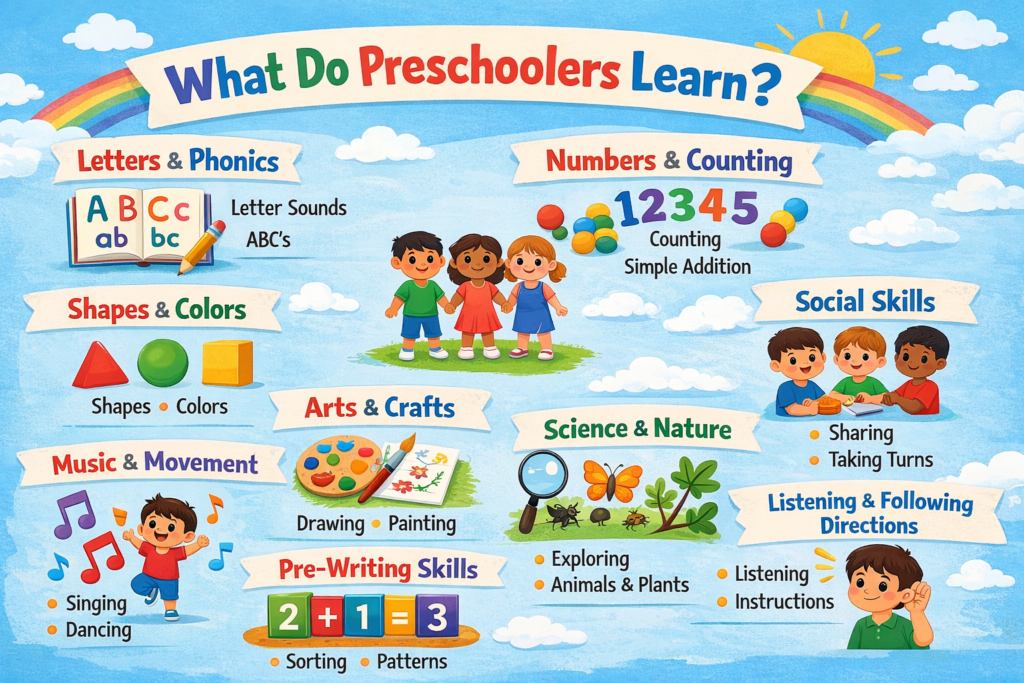
Preschoolers learn communication skills, social skills, creativity, early literacy, basic math concepts, and independence through fun activities like storytelling, music, play-based learning, art, and outdoor play. These early learning experiences help children develop confidence and prepare them for primary school.
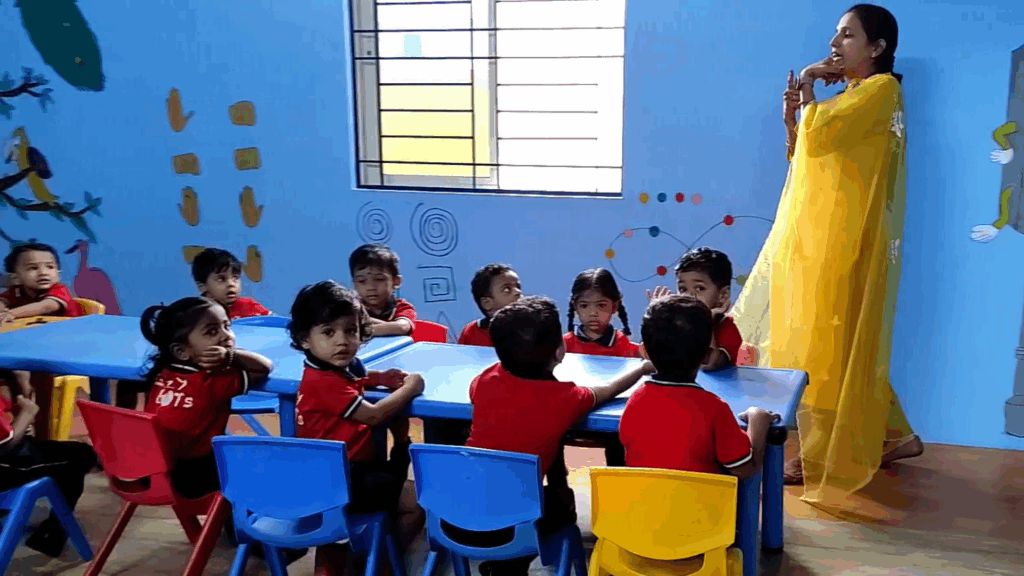
At Krazy Tots International Preschool in Horamavu, Bengaluru, children learn through structured play, interactive activities, and a nurturing environment designed specifically for early childhood development.
- Why Preschool Learning Is Important
- What Do Preschoolers Learn: Quick Overview
- 1. Language and Communication Skills
- 2. Early Reading and Writing Skills
- 3. Basic Math and Numeracy Skills
- 4. Social Skills and Teamwork
- 5. Emotional Development
- 6. Creativity and Imagination
- 7. Physical Development and Motor Skills
- 8. Independence and Confidence
- How Krazy Tots International Preschool Helps Children Learn
- Preparing Your Child for Preschool
- Final Thoughts of What Do Preschoolers Learn?
- What Do Preschoolers Learn FAQs
Why Preschool Learning Is Important
The early years of a child’s life are critical for brain development. Research shows that 90% of brain development happens before the age of five. This means the experiences children have during this time shape their future learning abilities.
A good preschool program helps children develop:
- Cognitive skills
- Emotional intelligence
- Communication skills
- Physical coordination
- Social behavior
- Confidence and independence
Preschools like Krazytots focus on creating an environment where children feel safe, curious, and excited to learn.
What Do Preschoolers Learn: Quick Overview
| Learning Area | What Children Learn | Example Activities |
|---|---|---|
| Language Skills | Speaking, listening, vocabulary | Storytelling, rhymes |
| Early Literacy | Alphabet recognition, phonics | Letter games, picture books |
| Numeracy Skills | Counting, shapes, numbers | Number games, puzzles |
| Social Skills | Sharing, teamwork | Group activities |
| Emotional Skills | Expressing feelings | Role play |
| Creativity | Art, music, imagination | Painting, singing |
| Physical Skills | Motor coordination | Outdoor play |
This combination of skills ensures children grow in all areas of development, not just academics.
1. Language and Communication Skills
One of the most important things preschoolers learn is how to communicate effectively.
Children develop language skills through activities like:
- Storytelling
- Rhymes and songs
- Group conversations
- Reading picture books
- Show-and-tell activities
These activities help children improve:
- Vocabulary
- Listening skills
- Sentence formation
- Confidence while speaking
At Krazy Tots International Preschool, teachers encourage children to express themselves freely, which builds confidence and communication ability from an early age.
2. Early Reading and Writing Skills
Preschool introduces children to the basics of literacy in a fun and engaging way.
Children learn:
- Alphabet recognition
- Letter sounds (phonics)
- Simple word formation
- Pencil grip and writing readiness
- Picture-word association
Instead of traditional classroom learning, preschools use games, flashcards, songs, and storytelling to make learning enjoyable.
This play-based approach helps children develop a love for reading and learning.
3. Basic Math and Numeracy Skills
Preschoolers also begin to understand basic mathematical concepts.
These include:
- Counting numbers
- Recognizing shapes
- Understanding patterns
- Comparing sizes
- Sorting and grouping objects
Teachers often use toys, blocks, puzzles, and counting games to make math interactive.
For example, stacking blocks can help children understand numbers, balance, and spatial awareness at the same time.
4. Social Skills and Teamwork
Preschool is often a child’s first experience interacting with other children regularly.
Here they learn important social behaviors such as:
- Sharing toys
- Taking turns
- Listening to others
- Working in groups
- Respecting classmates
Group activities and collaborative games help children understand how to cooperate with others.
These skills are extremely important for success in school and later in life.
5. Emotional Development
Young children are still learning how to manage their emotions.
Preschool helps children understand and express feelings in healthy ways.
They learn how to:
- Express happiness, sadness, and frustration
- Build friendships
- Handle small conflicts
- Develop empathy for others
Supportive teachers help children feel safe and valued, which builds emotional confidence and security.
6. Creativity and Imagination
Creativity is a major part of early childhood learning.
Preschools encourage creativity through activities like:
- Drawing and painting
- Clay modeling
- Music and dance
- Storytelling
- Pretend play
Creative activities allow children to explore their imagination and express themselves freely.
These activities also improve problem-solving skills and cognitive development.
7. Physical Development and Motor Skills
Physical activity is essential for young children.
Preschool programs include activities that improve both fine motor skills and gross motor skills.
Examples include:
Fine Motor Skills
- Coloring
- Cutting paper
- Building blocks
- Writing practice
Gross Motor Skills
- Running
- Jumping
- Climbing
- Ball games
At Krazy Tots International Preschool in Horamavu, children enjoy a large outdoor play area and covered play spaces, allowing them to stay active while learning.
8. Independence and Confidence
Preschool encourages children to become more independent.
Children learn everyday skills such as:
- Packing their bags
- Following routines
- Cleaning up after activities
- Making small decisions
- Completing simple tasks
These activities help children become more confident and responsible.
By the time they move to primary school, they are better prepared to manage classroom routines.
How Krazy Tots International Preschool Helps Children Learn
A high-quality preschool environment makes a big difference in how children learn.
At Krazy Tots International Preschool in Horamavu, children benefit from:
- Spacious open campus
- Covered play area
- Large outdoor play space
- Safe and nurturing classrooms
- Experienced teachers
- Activity-based learning programs
- Affordable preschool education
The goal is to create a place where children learn, explore, and grow with confidence.
Parents looking for a trusted preschool in Horamavu often choose Krazytots because of its balanced focus on learning, safety, and child development.
Preparing Your Child for Preschool
Parents can also support preschool learning at home by:
- Reading books with their child
- Encouraging creative play
- Talking and asking questions
- Practicing simple counting
- Establishing daily routines
These small activities reinforce what children learn at preschool.
Final Thoughts of What Do Preschoolers Learn?
Preschool is one of the most important stages in a child’s education. It builds the foundation for learning, confidence, and social skills.
Through play-based activities and guided learning, preschoolers develop language, math, creativity, emotional intelligence, and physical coordination.
Choosing the right preschool environment ensures children receive the support they need during these important early years.
If you are looking for a nurturing preschool in Horamavu, Krazytots International Preschool provides a safe and engaging environment designed to help children thrive.
What Do Preschoolers Learn FAQs
What do preschoolers learn in preschool?
Preschoolers learn communication skills, early reading and math concepts, social interaction, creativity, emotional skills, and independence through play-based learning activities.
At what age should a child start preschool?
Most children start preschool between 2.5 and 3 years of age, depending on their readiness and the preschool program.
How does preschool help child development?
Preschool supports cognitive, emotional, social, and physical development by exposing children to structured learning and interactive play.
Is preschool necessary for children?
While not mandatory, preschool helps children develop early learning skills, confidence, and social abilities that prepare them for primary school.
What skills should a child have before preschool?
Basic skills like speaking simple sentences, following instructions, and interacting with others help children adjust easily to preschool.