How to Prepare a Toddler for Preschool: A Gentle and Practical Guide for Parents
Sending your toddler to preschool is a big step. For many families, this may be the first time their little one spends a few hours away from home. It’s completely normal to feel excited and nervous at the same time.
If you’re wondering how to prepare a toddler for preschool, don’t worry. Krazytots With small, simple steps, you can help your child feel confident, safe, and ready for this new adventure.
- When Is a Toddler Ready for Preschool?
- 1. Talk About Preschool in a Happy Way
- 2. Practice Being Apart for Short Time
- 3. Create a Simple Daily Routine
- 4. Encourage Small Independent Skills
- 5. Help Them Build Social Comfort
- 6. Read Books About Starting School
- 7. Visit the Preschool Before the First Day
- 8. Keep the First Day Calm and Simple
- 9. Be Patient During the Adjustment Phase
- 10. Stay Positive and Trust the Process
- How to Prepare a Toddler for Preschool FAQs
- Final Thoughts
When Is a Toddler Ready for Preschool?
Most toddlers start preschool between 2 to 3 years old. At this age, children are:
- Curious about the world
- Interested in playing with other kids
- Learning to talk and express themselves
- Exploring independence
Every child is different. Readiness is not about knowing ABCs — it’s about emotional comfort and basic independence.
1. Talk About Preschool in a Happy Way
Toddlers understand more than we think. Start talking about preschool positively.
You can say things like:
- “You’re going to play with new friends.”
- “Your teacher will sing songs with you.”
- “There will be toys and fun games.”
Keep the tone cheerful and simple. Avoid long explanations. Toddlers respond best to short, positive sentences.
2. Practice Being Apart for Short Time
Separation anxiety is common at this age. To help:
- Leave your toddler with a trusted family member for 30–60 minutes.
- Slowly increase the time.
- Always say goodbye clearly before leaving.
Never sneak away. This builds trust and helps your child understand that you always come back.
3. Create a Simple Daily Routine
Preschool follows a routine. Start building one at home.
Focus on:
- Fixed wake-up time
- Regular meal times
- Nap schedule
- Early bedtime
When children know what to expect, they feel secure.
4. Encourage Small Independent Skills
Toddlers don’t need to be fully independent, but basic skills help a lot.
Gently teach them to:
- Wash hands with help
- Drink from a cup
- Eat simple foods independently
- Put toys back after playing
- Ask for help when needed
Celebrate small successes. Confidence grows step by step.
5. Help Them Build Social Comfort
Preschool means being around other children.
You can:
- Arrange small playdates
- Visit parks regularly
- Encourage sharing and taking turns
At this age, parallel play (playing beside other children) is normal. Social skills will grow gradually.
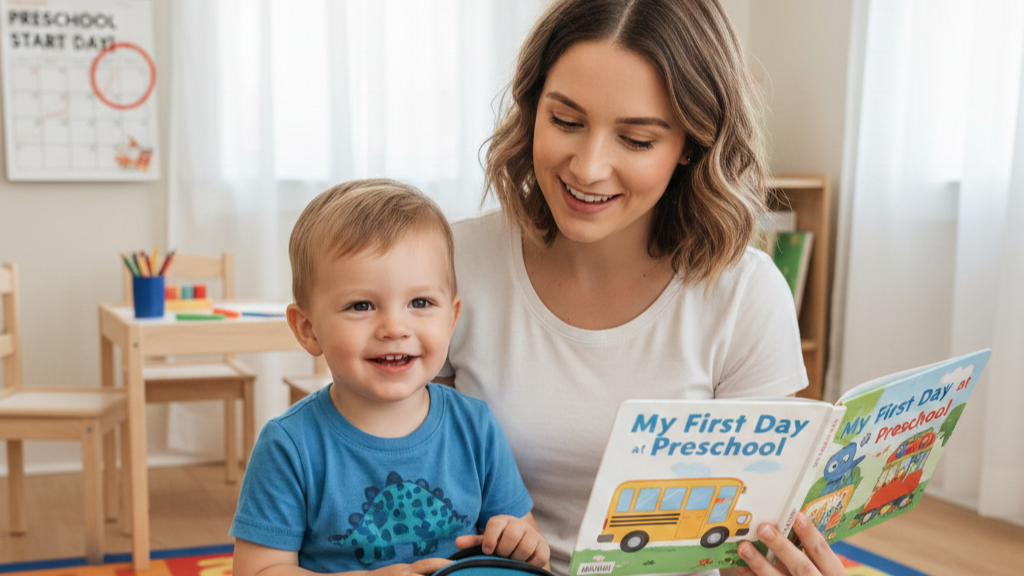
6. Read Books About Starting School
Storybooks about preschool are very helpful. They show toddlers that other children also go to school.
After reading, you can say:
“Look, this child goes to school and has fun. You will too!”
This makes preschool feel familiar.
7. Visit the Preschool Before the First Day
If possible:
- Show them their classroom
- Introduce them to the teacher
- Let them see the toys and play area
Familiar surroundings reduce fear on the first day.
8. Keep the First Day Calm and Simple
On the first day:
- Wake up early without rushing
- Dress them comfortably
- Pack their bag together
- Keep goodbye short and loving
If they cry, stay calm. Teachers are experienced in handling first-day emotions. Most toddlers settle down quickly once they start playing.
9. Be Patient During the Adjustment Phase
It’s normal for toddlers to:
- Cry at drop-off
- Be extra clingy at home
- Feel tired or emotional
Adjustment can take a few days or even a few weeks. Stay consistent and supportive.
Avoid stopping preschool immediately unless there is a serious issue. Consistency helps children adapt faster.
10. Stay Positive and Trust the Process
Children sense your emotions. If you feel confident and calm, they are more likely to feel secure.
Trust your choice of preschool. Teachers are trained to guide toddlers gently through this transition.
How to Prepare a Toddler for Preschool FAQs
What if my toddler cries every day?
Crying is very common in the beginning. Most children settle within 1–3 weeks.
Does my toddler need to be toilet trained?
Some preschools require partial toilet training, while others provide support. Check with your school.
How many hours should a toddler attend preschool?
Usually 2–3 hours per day is ideal at this age.
Final Thoughts
Preparing a toddler for preschool is not about academics. It’s about building emotional security, independence, and comfort in a new environment.
With patience, routine, and positive encouragement, your toddler will slowly start enjoying school. Soon, they will walk in confidently, ready to explore, play, and learn.
Preschool is the beginning of a beautiful journey — and with gentle preparation, it can be a happy one for both you and your child.