How to Increase Concentration in Kids
Simple Tips Every Parent Should Know
Children often find it difficult to concentrate for long periods. This is completely normal, especially during early childhood. Their brains are still developing, and they learn best through play, movement, and short engaging activities.
If you are wondering how to improve your child’s concentration, the answer is simple: create healthy routines, provide fun learning activities, reduce distractions, and ensure proper sleep and nutrition. Small daily habits can gradually improve a child’s ability to focus and complete tasks successfully.
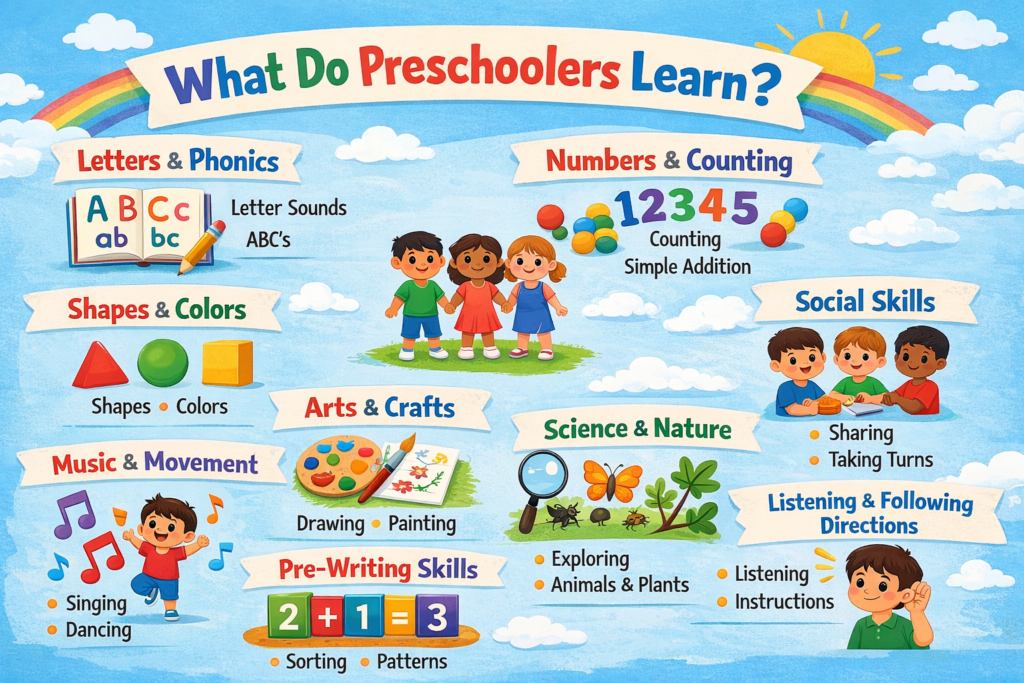
Preschools that follow activity-based learning, like Krazy Tots International Preschool in Horamavu, Bengaluru, help children develop focus naturally through play, storytelling, puzzles, and hands-on learning.
- Why Concentration Is Important for Children
- Average Attention Span of Children
- 10 Simple Ways to Improve Concentration in Kids
- Activities That Improve Concentration in Preschoolers
- How Preschools Help Improve Children’s Focus
- Signs Your Child May Need Help Improving Concentration
- Tips for Parents to Support Concentration at Home
- Why Early Childhood Education Helps Improve Concentration
- How to Increase Concentration in Kids FAQs
- Final Thoughts
Why Concentration Is Important for Children
Concentration helps children:
- Learn new concepts faster
- Complete tasks independently
- Develop problem-solving skills
- Improve memory and creativity
Children with better focus are more confident learners and adapt better when they start formal schooling.
Experts explain that building concentration early helps children manage attention, complete tasks, and develop long-term learning skills.
Average Attention Span of Children
| Age | Average Attention Span |
|---|---|
| 2–3 years | 4–6 minutes |
| 4–5 years | 8–12 minutes |
| 6–8 years | 12–20 minutes |
| 9–12 years | 20–30 minutes |
This is why preschool learning focuses on short activities, interactive play, and movement-based learning instead of long lectures.
10 Simple Ways to Improve Concentration in Kids
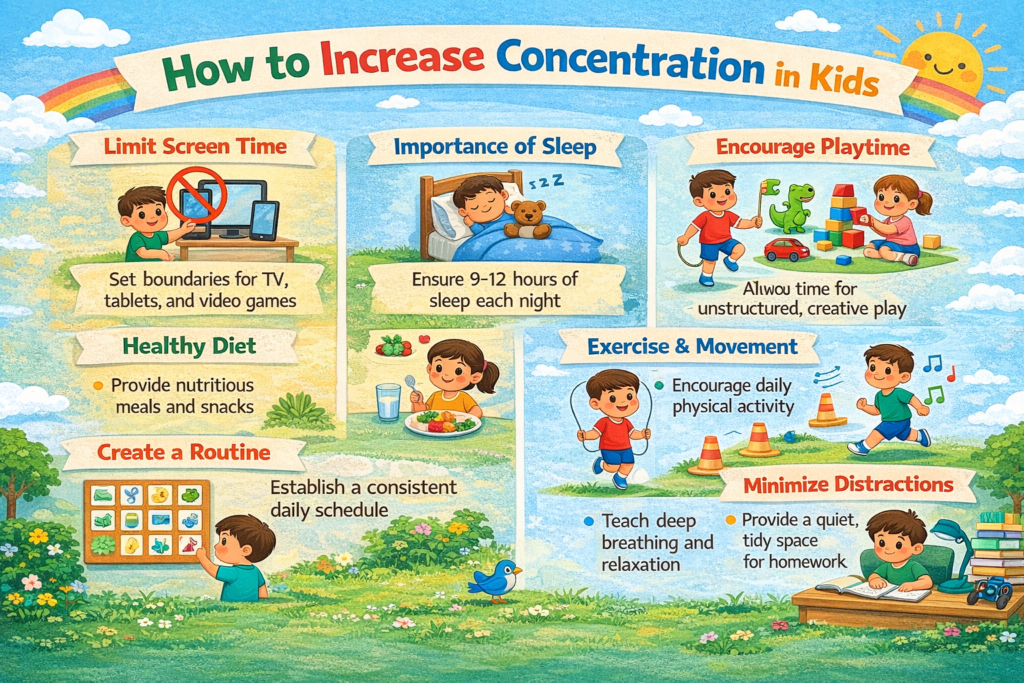
1. Create a Daily Routine
Children feel more comfortable when they know what to expect each day.
A consistent routine for meals, playtime, learning, and sleep helps children mentally prepare for activities and improves focus.
For example:
- Morning playtime
- Learning activities
- Outdoor play
- Storytime
- Sleep routine
2. Reduce Distractions
Too many distractions make it difficult for children to concentrate.
Parents should reduce:
- TV noise
- Mobile phones
- Loud environments
A quiet and calm environment helps children focus better on tasks.
3. Encourage Physical Activity
Children need movement.
Outdoor play helps release extra energy and improves brain function, which helps them concentrate better afterwards.
Activities like:
- Running
- Jumping
- Cycling
- Playground games
all improve attention span.
4. Break Tasks Into Smaller Steps
Large tasks can overwhelm children.
Instead of saying:
“Clean your room”
Try saying:
- Put toys in the basket
- Arrange books
- Fold clothes
Completing small tasks builds confidence and keeps children motivated.
5. Provide Short Breaks
Children cannot focus continuously for long periods.
Short breaks between activities help reset their brain and improve concentration.
Examples of break activities:
- Stretching
- Drinking water
- Quick dance
- Drawing
6. Use Educational Games
Games are one of the best ways to improve concentration.
Some useful activities include:
- Puzzles
- Memory games
- Building blocks
- Board games
These activities strengthen attention and problem-solving skills while keeping children engaged.
7. Encourage Reading and Storytelling
Storytime helps children improve listening skills and focus.
When children listen to stories, they:
- Imagine characters
- Follow events
- Understand language
This naturally improves their attention span.
8. Ensure Proper Sleep
Sleep plays a huge role in concentration.
Children who don’t get enough sleep often struggle to focus.
Experts recommend 9–12 hours of sleep for young children to support brain development and attention.
9. Provide Healthy Nutrition
The brain needs proper nutrition to function well.
Healthy foods that support concentration include:
- Eggs
- Nuts
- Fruits
- Vegetables
- Whole grains
Too much sugar or junk food can reduce energy levels and focus.
10. Encourage Creative Activities
Creative activities improve concentration while making learning fun.
Examples include:
- Drawing and coloring
- Clay modeling
- Music and dance
- Craft activities
Preschools often use these activities to improve children’s creativity and focus.
Activities That Improve Concentration in Preschoolers
| Activity | Skill Developed |
|---|---|
| Puzzle solving | Problem solving |
| Block building | Focus and patience |
| Drawing and coloring | Creativity |
| Storytelling | Listening skills |
| Sorting colors | Observation skills |
| Hopscotch | Coordination and attention |
These activities are commonly used in modern preschools to develop concentration naturally.
How Preschools Help Improve Children’s Focus
Preschools play a major role in developing attention skills.
A good preschool environment includes:
- Structured daily routines
- Activity-based learning
- Interactive classrooms
- Small group activities
- Outdoor play
At Krazy Tots International Preschool in Horamavu, children learn through fun and engaging activities that help them improve concentration while enjoying the learning process.
The school focuses on:
- Play-based learning
- Creative exploration
- Physical development
- Social interaction
This balanced approach helps children develop strong attention skills from an early age.
Signs Your Child May Need Help Improving Concentration
Sometimes children may struggle with focus due to different reasons.
Common signs include:
- Easily distracted
- Difficulty completing tasks
- Forgetting instructions
- Losing interest quickly
In most cases, improving daily routines, sleep, and learning activities can help children develop better focus.
Tips for Parents to Support Concentration at Home
Parents can support their child’s concentration by:
- Creating structured routines
- Encouraging outdoor play
- Limiting screen time
- Reading stories daily
- Praising effort and progress
Small daily habits can gradually build a child’s ability to focus.
Why Early Childhood Education Helps Improve Concentration
Early childhood education programs are designed to help children build essential skills such as:
- Focus and attention
- Social interaction
- Communication
- Problem solving
A supportive preschool environment helps children develop these abilities through play and guided learning.
How to Increase Concentration in Kids FAQs
How can I increase my child’s concentration?
You can improve concentration by creating daily routines, reducing distractions, encouraging physical activity, and engaging children in puzzles, games, and creative activities.
What activities improve concentration in kids?
Activities such as puzzles, memory games, storytelling, drawing, and building blocks help children develop focus and attention skills.
How long can preschool children concentrate?
Preschool children usually concentrate for about 5–15 minutes depending on their age and interest level.
Does physical activity improve concentration?
Yes. Physical activity improves brain function, reduces restlessness, and helps children focus better on learning tasks.
Can preschool improve a child’s concentration?
Yes. Preschool environments use play-based learning, creative activities, and structured routines that help children naturally develop concentration and learning skills.
Final Thoughts
Concentration is an important skill that children develop gradually during their early years. With the right environment, routines, and learning activities, children can improve their attention and focus naturally.
A supportive preschool environment plays a key role in this development. At Krazy Tots International Preschool in Horamavu, Bengaluru, children participate in fun learning activities that build concentration, creativity, and confidence from an early age.
By combining play, exploration, and structured learning, children develop the skills they need for future academic success.